About the Event
Enlarge
Enlarge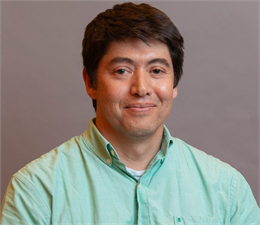
The Wisconsin Historical Society Speakers Bureau offers an exciting opportunity for our historians, curators and authors to visit your community and share the stories of our great state.
Archaeologists have generally used three methods to learn about our past; Research, Field Work, and Technology. Generally, people will specialize in one method while only touching on the others. At the Wisconsin Historical Society, we are working to integrate all three methods in our work to improve our efficiency and provide a more complete picture of our state’s history. This talk will look at how the different methods work independently and how by using all resources we can learn even more.
Felipe Avila is the State Historic Preservation Office (SHPO) GIS Coordinator and Compliance Officer. He assists consultants, and units of government with data requests and mapping queries, providing that information in a clear and usable manner. He assists archaeologists with visualizing the spatial patterns of sites, in both historic and prehistoric contexts to learn more about past patterns of human activity. He also reviews construction projects for compliance with state and federal historic preservation laws. For 13 years, he served as an Engineering GIS Specialist for the City of Fitchburg, WI, where he was involved in construction management, storm water management and modeling, and design work; in that capacity, he constructed the City’s GIS system and performed the occasional Phase I archaeological survey, while assisting other City departments (police, fire, planning & parks, forestry, streets, water utility) with their GIS needs. During COVID he was transferred to the Department of Health Services where he worked as data analyst for the testing and vaccination task forces. Before his involvement with GIS, Felipe was involved in cultural resource management work in Ohio and was a field archaeologist with the Wisconsin Historical Society’s Museum Archaeology Program. He graduated from Ohio State University with a B.A. in Political Science and Anthropology and holds a Graduate Certificate in Geographic Information Systems from the University of Wisconsin-Madison; Felipe is a member of the Wisconsin Land Information Association and was a past President for the Wisconsin State Agency Geospatial Information Committee (SAGIC). He is also a member of the Wisconsin Archeological Society and is a registered qualified archaeologist in Wisconsin.