Working in Burial Sites

Working in Burial Sites
Wisconsin's Burial Site Preservation Law has various oversight processes that guide both members of the public and professionals in how to work within burial site boundaries. This page provides guidance on what is needed if you plan to work in the boundaries of a burial site, as well as how to become a qualified professional under the law to do archaeological work in burial sites and to perform skeletal analysis.
How to Work or Build Within a Human Burial Site
-
Obtain Authorization to Disturb a Human Burial Site
Ground disturbance within the boundaries of human burial sites requires formal authorization from the Director of the Wisconsin Historical Society.
To request authorization to conduct work within the boundaries of a human burial site (uncatalogued or catalogued), download and submit a completed Request to Disturb a Burial Site form.
For work planned in an uncatalogued burial site, or in uncatalogued portions of catalogued burial sites, a Request to Disturb must be submitted at least 30 days in advance of planned work. Authorization must be obtained before work in the burial site boundaries may begin.
For work planned in a catalogued burial site, a Request to Disturb must be submitted at least 90 days in advance of planned work. A Permit from the Wisconsin Historical Society must be obtained before work in the burial site boundaries may begin.
Only one Request to Disturb form is necessary per project. The request may be made by the archaeologist or archaeological consulting firm hired to conduct the work on behalf of their client. The form can also be submitted by the contracting agency, the agency's agent, the landowner or the landowner's agent may make the request.
If the planned fieldwork is on non-Federal public land (State, County, Civil Town, or Municipal), you will also need to submit and obtain a signed Public Lands Permit from the Wisconsin Historical Society prior to commencing work.
-
If the Authorization or Permit Is Granted
If authorization to disturb a burial site is granted, the planned work may proceed according to the reviewed plans as long as all stipulations in the authorization are followed.
Authorizations and permits are good for one year from the date issued. If project plans change from what was approved, they must be submitted for re-review and re-authorization.
If the planned ground disturbance will take longer than one year, you can request an extension to the existing authorization.
If authorization or permit to disturb the burial site is denied, you may appeal.
-
Hire a Qualified Archaeologist
The Society has lists of archaeologists qualified to work within the boundaries of human burial sites and to analyze skeletal remains.
If your authorization or permit stipulates a qualified archaeologist must monitor all ground disturbing work, that archaeologist must be hired from that list.
If human remains are found during project activities and cannot be left in place, you will be required to have the remains excavated by a professional archaeologist, and for the remains to be analyzed by a skeletal analyst in order to determine how old they are and who they belonged to. Society staff will use the information in the archaeologist's report to identify who should be offered custody of the remains.
All costs associated with the excavation and analysis of human remains are the responsibility of the landowner, contractor, or agency requesting to disturb the burial site.
Is Authorization Always Necessary?
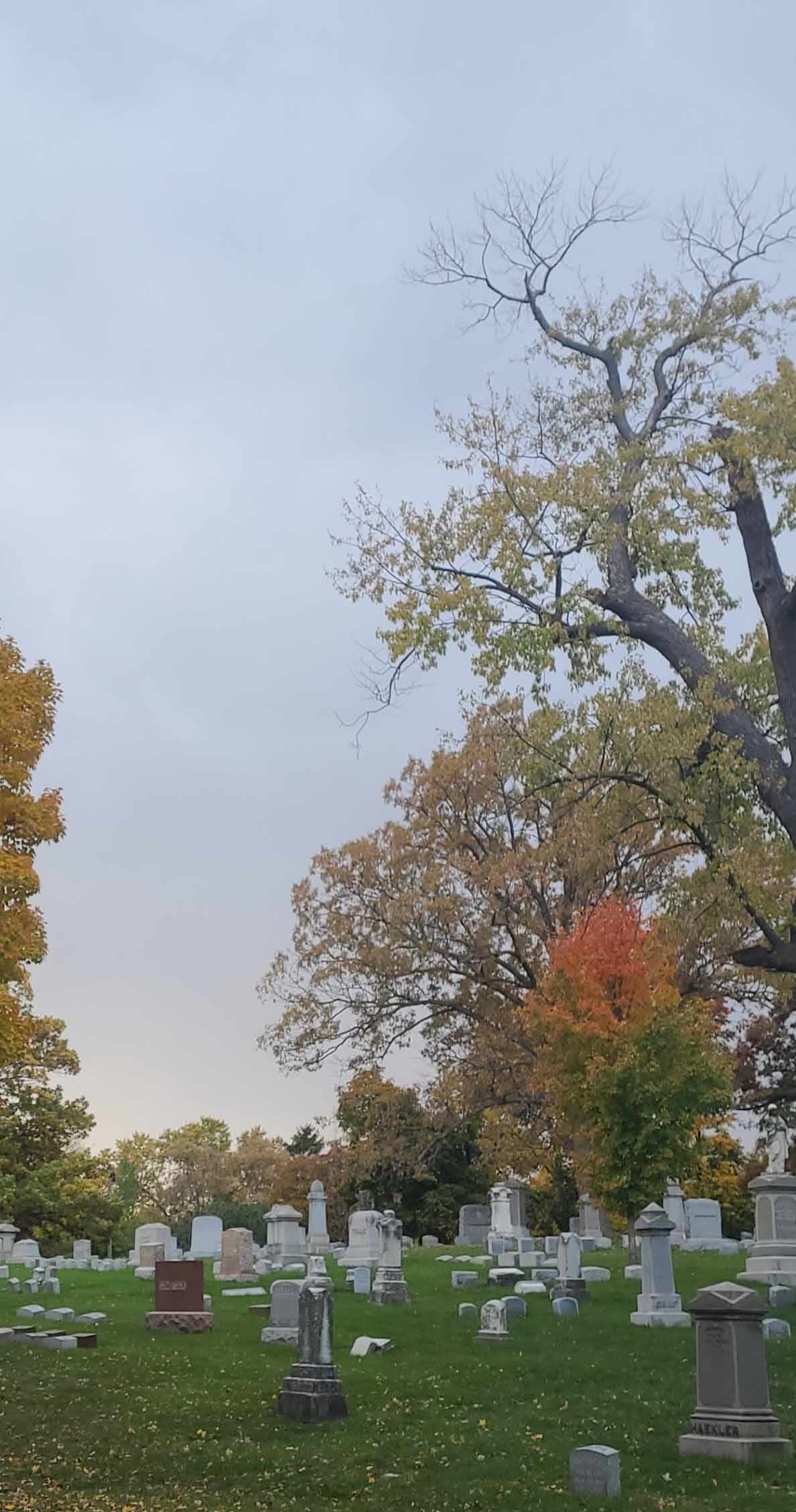
No. Normal cemetery business does not require authorization from the Director of the Wisconsin Historical Society. Normal cemetery business includes landscaping, replacing burial markers, and the excavation of new graves. Requests to exhume bodies from active cemeteries are considered by county medical examiners and coroners, not the Wisconsin Historical Society.
Resources for Working in Burial Sites
Ground disturbance within a burial site is any activity that disturbs the ground that impacts the surface characteristics of a burial site.
Normal cemetery business, including landscaping, replacing burial markers, and the excavation of new graves, is exempt from the burial law.
Examples of archaeological activities requiring approval include, but are not limited to:
- soil cores and soil borings
- well excavations and perk tests
- shovel tests and shovel probes
- stripping
- trenching
- test units
- large-scale excavations
If the planned fieldwork is on non-Federal public land (State, County, Civil Town, or Municipal), you will also need to submit and obtain a signed Public Lands Permit from the Wisconsin Historical Society prior to commencing work.
Wisconsin state statute contains provisions that restrict activity within human burial sites. Therefore, your literature review should be designed to identify burial sites within each project APE well before fieldwork begins. Remember, all archaeological work within human burial sites requires authorization from the Wisconsin Historical Society.
How you research burial sites in a project area can streamline your project and make your work more efficient. A proper and thorough literature review will help you understand which types of authorization you should request from the Wisconsin Historical Society for each site, as well as how long it will take to obtain authorization.
Wisconsin Historic Preservation Database (WHPD)
A key tool to help your literature review is the Wisconsin Historic Preservation Database (WHPD). The WHPD contains information about cultural resources located within Wisconsin. It consists of three separate databases:
- Archeological Sites Inventory (ASI) - contains information about archaeological and burial sites.
- Archaeological Reports Inventory(ARI) - contains summaries of archaeological investigations at archaeological and burial sites.
- Architectural History Inventory (AHI) – contains basic information on historic buildings, structures and objects. Most include exterior images.
When it comes to burial sites, your literature search should include checking both the ASI and ARI. Learn how to access the WHPD database.
Key Questions WHPD Can Help Answer During Your Literature Review
1. Are There Any Burial Sites Within Your Project Area?
To check for burial sites within your project area, search maps in the ASI and query the ASI by Town, Range, and Section. Not all human burial sites are mapped. If a site is not mapped, there may be a note in the site description explaining why and what implications there might be for your fieldwork.
2. What Are the Boundaries of the Burial Sites Within Your Project Area?
If there are burial sites in your project area, the next step in your literature review should be to identify their boundaries. Keep in mind that burial sites can have more than one type of boundary, depending on their status under Wisconsin's burial sites law. Many burial sites are only partially catalogued, with catalogued sections inside a larger uncatalogued boundary.
- In many cases, the site boundaries shown on ASI maps represent the uncatalogued boundaries of the burial site.
- Cataloged boundaries of a burial site may not be the same as the overall site boundary. Cataloged boundaries are not shown on ASI maps, so your literature review should include a map of the relationship between your project area and any cataloged portions of a burial site.
- Information about cataloged boundaries of burial sites is located in the ASI files housed in the State Historic Preservation Office at the Wisconsin Historical Society, and are constantly being uploaded to digital ASI files in the "Documents" tab. If not available digitally, descriptions and maps of cataloged boundaries are available upon request. Please contact the Office of the State Archaeologist to request cataloging information.
- Some human burial sites have been partially or entirely exempted from Wis. Stats. 157.70. The status field in their WHPD records provides this information. Maps of exempt and non-exempt areas of partially exempted sites are available upon request. Please contact the Office of the State Archaeologist to request maps of exempted areas of partially exempted sites.
3. Do You Need To Obtain Authorization From the Wisconsin Historical Society Before Beginning Fieldwork?
- If all or part of a burial site is no longer protected by Wisconsin's burial sites law (Wis. Stats. 157.70), you do not need to request authorization to disturb those excluded areas.
- Any discrepancies between the ASI records and other sources consulted during your literature review should be cleared up with the Office of the State Archaeologist before you request authorization to disturb a burial site. If the ASI record is found to be in error, authorization may not be necessary.
The types of boundaries your project intersects will determine how your fieldwork should be planned and conducted. You will need to allow at least 90 days for a request to disturb a cataloged burial site to be processed, and 30 days for a request to disturb an uncatalogued burial site or an uncatalogued portion of a cataloged burial site.
How Accurate Are the WHPD Records?
A thorough literature review for a burial site should consult as many sources as possible, and source references should always be checked before proceeding. Sites may be mismapped and not actually within your project area, or sites might not exist at all. It is best to identify these cases before unnecessary expense to your firm, your clients, and Wisconsin’s taxpayers.
The site boundaries in the ASI reflect a best effort to ascertain site location and site dimensions based on a variety of sources, some over 150 years old. Society staff have not been able to thoroughly research or field verify all references. If you feel that a WHPD record contains errors, submit an ASI update form to the Office of the State Archaeologist in advance of any requests to disturb the site. Depending on the results of the update, a request to disturb may be unnecessary.
How to Deal With 'Blank' Cemetery Records
The ASI records for some post-contact cemeteries contain little information beyond their location. Some records correspond to unmarked cemeteries. Others correspond to mapping errors made by earlier surveyors. Society staff have been adding information to these entries — and deleting them when appropriate — as time allows.
In the meantime, you can track down source information for 'blank' cemeteries by consulting the original Burial Sites Topographic Maps in the Society Archives. To access the maps, you will need to obtain a signed permission slip from the Office of the State Archaeologist.
Provisions of Wisconsin burial sites law affect how archaeologists conduct field research. The Wisconsin Archaeological Survey has created guidelines for public archaeology that should be consulted for fieldwork in Wisconsin. The Wisconsin Historical Society also recommends the following guidelines for work in burial sites.
Wisconsin Historical Society Guidelines for Archaeology in Burial Sites
- Identify known human burial sites during your initial field review.
- Double-check source references to identify any errors in site location, boundaries, or status in the Wisconsin Historic Preservation Database before submitting any Requests to Disturb a Human Burial Site. Submit any needed site updates to the Office of the State Archaeologist.
- If a Request to Disturb is needed, obtain authorization from the Wisconsin Historical Society prior to working within the boundaries of a human burial site.
- If you are planning to work within the boundaries of an uncatalogued burial site or the uncatalogued portion of a catalogued burial site, request authorization at least 30 days in advance of the planned project.
- If you are planning to work within the catalogued area of a burial site, a Permit should be requested at least 90 days in advance of the planned project.
- Follow Society and Wisconsin Archaeological Survey guidelines concerning the documentation of human burial sites.
If human bone is discovered during your archaeological survey or excavation, you must report the discovery immediately.
- Notify the Wisconsin Historical Society at 800-342-7834 (toll-free in Wisconsin) and at the Burial Sites Preservation email.
- Notify local law enforcement so that they can document the discovery and determine if the remains are forensically or archaeologically significant.
- Stop excavation at that location until you have received authorization from the Wisconsin Historical Society to continue. Limited authorization may be granted in order to determine whether or not the remains represent a human burial site or what type of burial site has been discovered.
- To exhume human burials from a burial site, a Memorandum of Agreement with the Wisconsin Historical Society must be established prior to removal. The provisions of the agreement document will be determined by the particular situation. The agreement document will, at minimum, establish a timeline and procedures for removal of the remains, analysis of the remains, and submittal of a final report to the Wisconsin Historical Society.
Identifying ‘New’ Human Burial Sites as a Member of the Public
If you encounter a potential mound or burial feature within an area not already identified as a burial site, a Reporting a New Burial or Archaeological Site form should be filled out and sent to the Office of the State Archaeologist.
Identifying ‘New’ Human Burial Sites as an Archaeologist
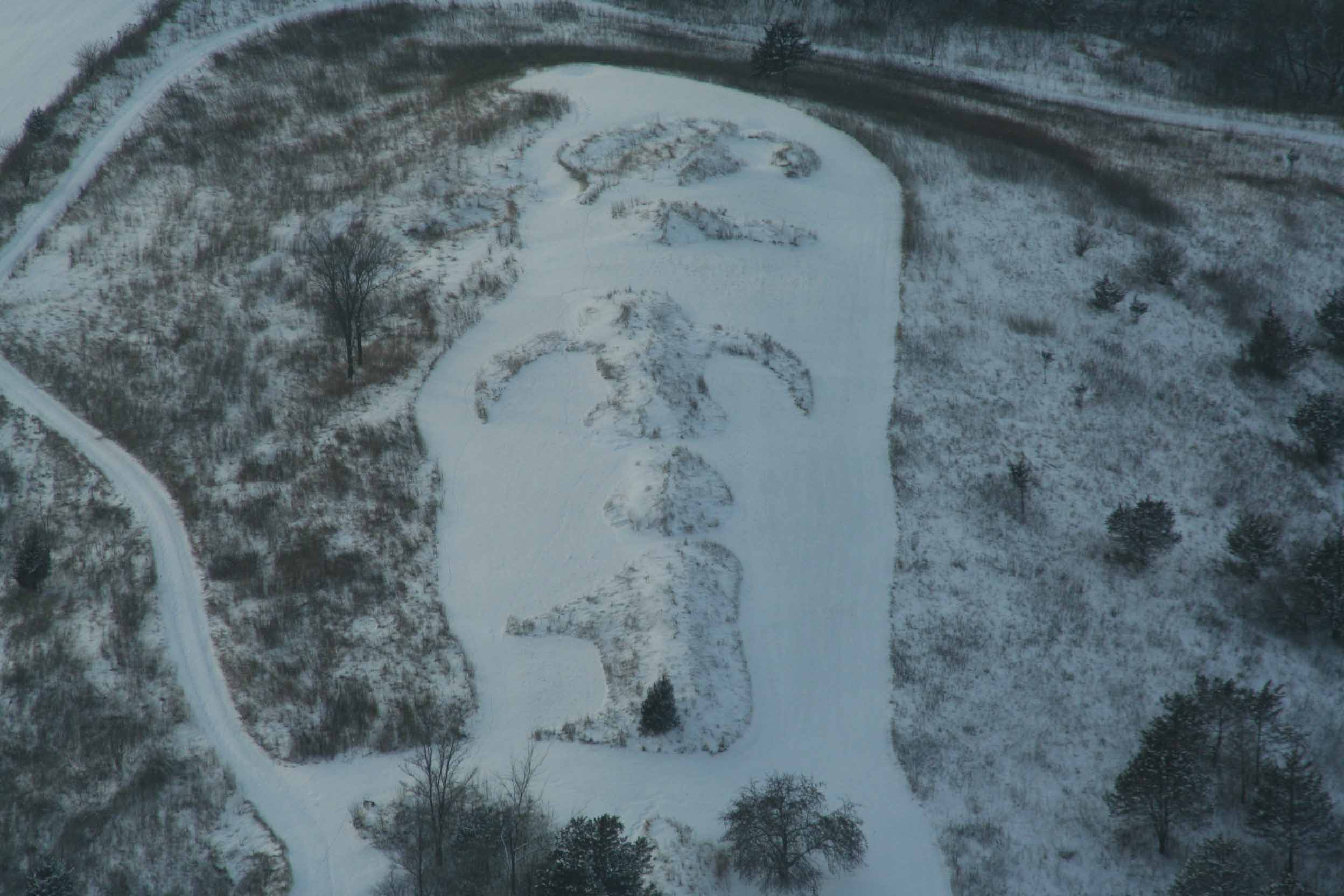
If you encounter a potential mound or burial feature within an area not already identified as a burial site, you are strongly encouraged to conduct limited subsurface exploration to determine if a human burial site is present. There is no need to submit a Request to Disturb a Human Burial Site form to the Wisconsin Historical Society beforehand.
Such testing should be as limited in scope as possible in order to minimize disturbance to any human remains, while still sufficient to determine whether or not a burial site is present. For example, a small number of soil cores should be sufficient to determine whether a potential burial mound exhibits soil development consistent with antiquity and signs of human construction. Testing should be conducted in concert with in-depth review of archival material and older aerial photos.
If human bone is identified during limited testing, testing must cease immediately and the discovery must be reported to the Wisconsin Historical Society. From that point forward, work within the site will fall under the provisions of Wis. Stats. 157.70.
No site reported to the Wisconsin Historic Preservation Database should be described as a ‘potential’ or ‘possible’ burial site as there are no legal categories for such sites. Instead, your field crew should determine through appropriate testing, archival review, and their best professional judgement if the site is a human burial site to be protected under Wis. Stats. 157.70.
A report compiling your evidence for the presence of a new burial site should be submitted to the Office of the State Archaeologist along with an ASI Form.
How to Become a Qualified Archaeologist for Burial Sites or a Qualified Skeletal Analyst
Under Wisconsin law, the Director of the Wisconsin Historical Society must approve the archaeologists who work within the boundaries of a human burial site or analyze human remains (Wis. Stats. 157.70 and HS 2). To be approved by the Director before you conduct any work, you must meet the mandatory qualifications and submit the required documentation for approval.
Archaeologists for Human Burial Sites
As required by 157.70(1) (i) and HS 2.04(6), the following list contains archaeologists approved by the Director of the Wisconsin Historical Society to excavate human burial sites. These archaeologists have agreed to provide consulting services to prospective clients.
How to Apply to Be a Qualified Archaeologist in Burial Sites
Meet Mandatory Requirements:
- a graduate degree in archaeology, anthropology or a closely related field;
- at least one year of full-time professional experience or equivalent specialized training in archaeological or physical anthropological research, administration or management;
- at least 4 months of supervised field and analytic experience in general North American archaeology or physical anthropology;
- a demonstrated ability to carry research to completion;
- experience doing archaeological work in burial sites.
Submit Required Documentation:
- Curriculum vitae or resume
- Two letters of reference that speak to your archaeological experience in burial sites
Skeletal Analysts
As required by HS 2.04(6), the Skeletal Analysts List is a directory of individuals approved by the Director of the Wisconsin Historical Society to analyze human remains. These osteologists have agreed to provide consulting services to prospective clients.
How to Become A Skeletal Analyst
Meet Mandatory Requirements:
- a graduate degree in archeology, anthropology, or a closely related field;
- at least one year of full−time professional experience or equivalent specialized training in human osteological research;
- at least 4 months of supervised analytic experience in the identification, analysis, and interpretation of human osteological remains;
- demonstrated ability to carry research to completion.
Submit Required Documentation:
- Curriculum vitae or resume
- Two letters of reference that speak to your ability to complete skeletal analysis on human remains
Contact Us Today!
You can contact the below offices by phone or by email using the links:
Archaeology: 608-264-6496
Review and Compliance: 608-261-2457
Historic Buildings: 608-264-6502
Burial Sites Preservation: 608-264-6464
National Register of Historic Places: 608-264-6502
Certified Local Governments: 608-264-6512
Report Burial Discovery Emergencies (Toll-Free in WI): 800-342-7834