American Civil War Collections


Take A Look Inside
The Wisconsin Historical Society began gathering documents about the Civil War and the 91,327 Wisconsinites who served in it as soon it started in 1861, and never stopped.
Hand-tinted stationery showing the Capitol in Washington, D.C. in 1862. The blue tint on the dome may have been intended to represent the unfinished nature of the dome which was not completed until December, 1863. The letter was written by Rudolph Fine, a member of the 6th Wisconsin Infantry, to his wife. ID:W0146UD
About the Civil War Collection
After more than 150 years of collecting, the Society owns nearly 10,000 books and pamphlets related to the Civil War, 1,300 manuscript collections filling hundreds of boxes, and more than 2,000 historical photographs, broadsides, and maps. These include official government publications, privately printed memoirs, contemporary newspaper articles, regimental histories, battle maps, political propaganda, letters, diaries, archives of government agencies, modern scholarly studies, popular non-fiction about the war, and much more.
The Society's collections contain very few Civil War objects since the Wisconsin Veterans Museum collects those items. Through a cooperative agreement, the two organizations work together to preserve these stories.
Features of the Collection
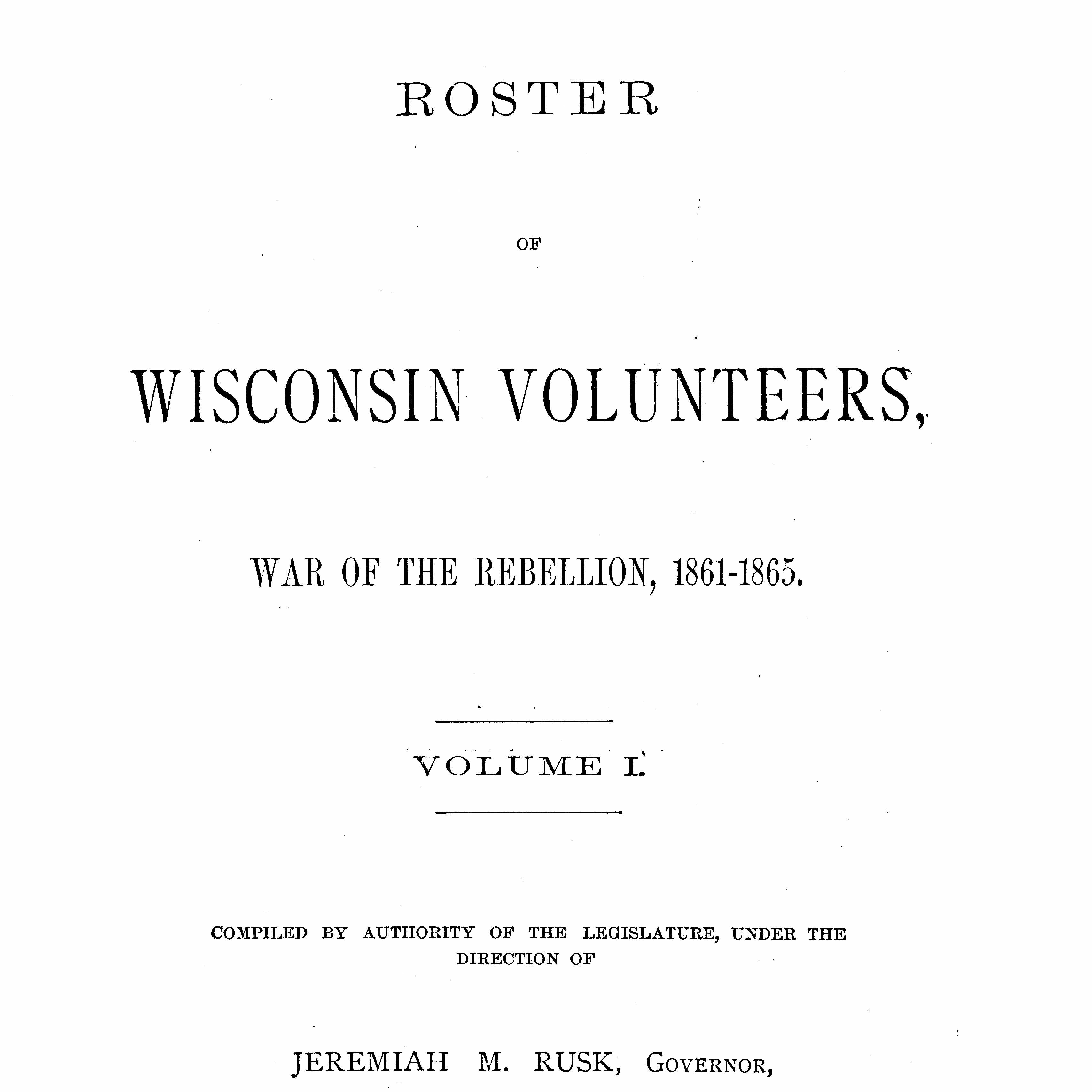
Roster of Wisconsin Volunteers
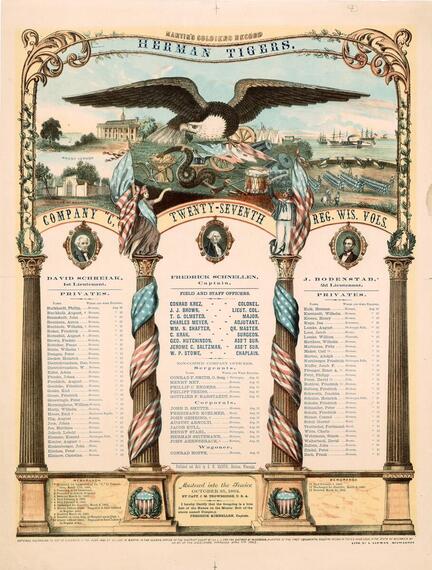
Roster of Wisconsin Volunteers
During the service of an individual in the Civil War, many records were created (muster-in rolls, pay rolls, descriptive lists, etc.). In January 1885, Governor Jeremiah M. Rusk brought to the attention of the legislature the gradual destruction of original war records by overuse resulting from the increased need for verification of military history for the purposes of pensions, assistance, Grand Army of the Republic, etc.
On April 15, 1885 a bill was approved by the governor and published as chapter 244, Laws of 1885, resulting in the creation of vital resources for historical research.
Published in 1886, the two volume set, Roster of Wisconsin Volunteers: War of the Rebellion 1961-1865 provides a regiment by regiment listing of volunteer soldiers. Soldiers are listed by regiments, then company with officers at the beginning followed by enlisted men.
In 1914, the Adjutant General of the State of Wisconsin published Wisconsin Volunteers: War of the Rebellion as an index to the rosters.
View Catalog Record
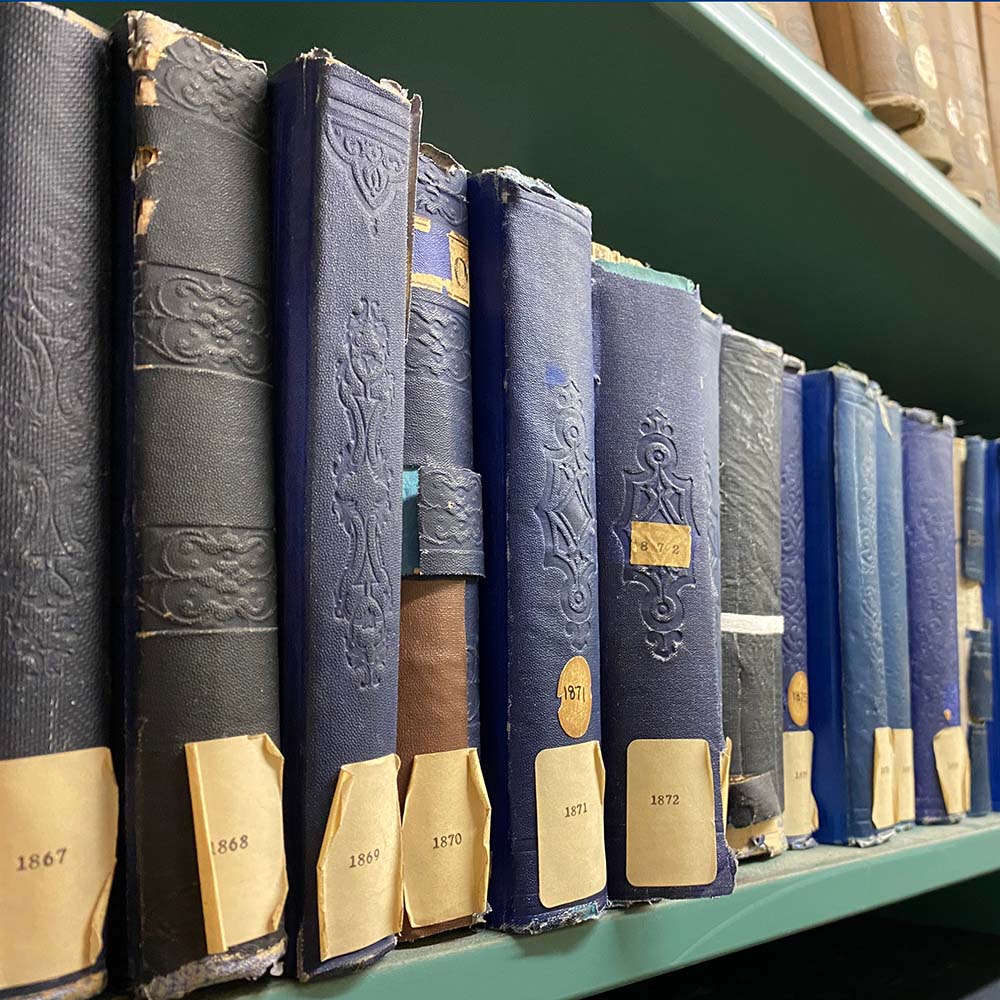
Blue and Red Books
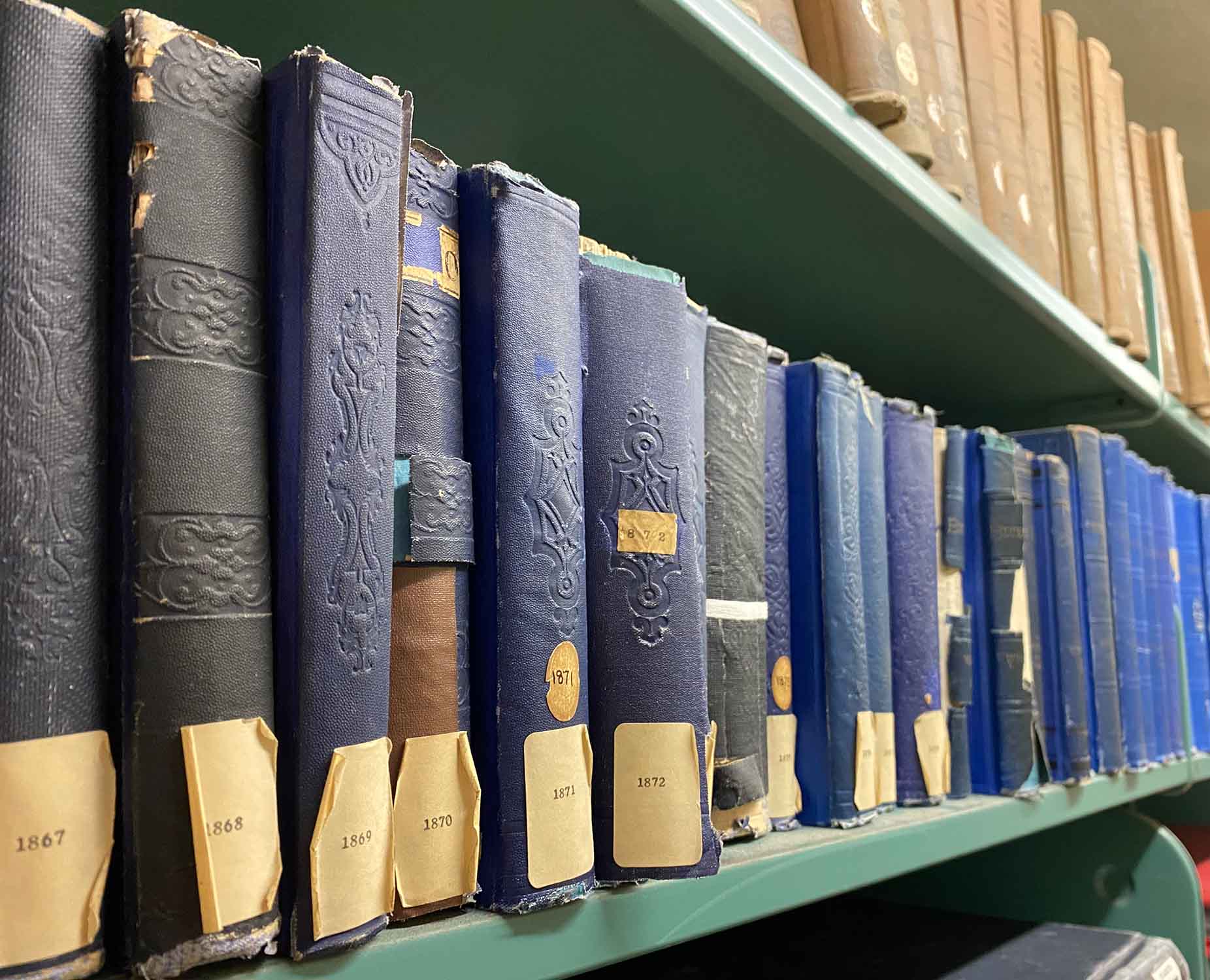
Blue and Red Books
The Red and Blue Books, so named for the color of their bindings, are two sets of handwritten muster rolls for Wisconsin Civil War soldiers.
The Wisconsin Adjutant General's Office created the Red Books during the war as volunteers mustered into their regiments. These rolls list details about the men serving in each Wisconsin military unit during the Civil War.
In the 1880s, the Wisconsin Adjutant General's Office compiled the Blue Books to more easily provide state verification of service in the Wisconsin military units for federal pensions. The Blue Books replicate much of the information in in the earlier rolls; with some of the following differences:
- The Red Books may show the volunteer's birthplace and name of mustering officer.
- Date service terminated and more complete information shown under "remarks" is appear in the Blue Books.
- The spelling of names varies in some cases between the two.
- Many miscellaneous units (e.g. Milwaukee Cavalry) were not included in the Red Books, but do appear in the Blue Books.
Blue Books:
Red Books:
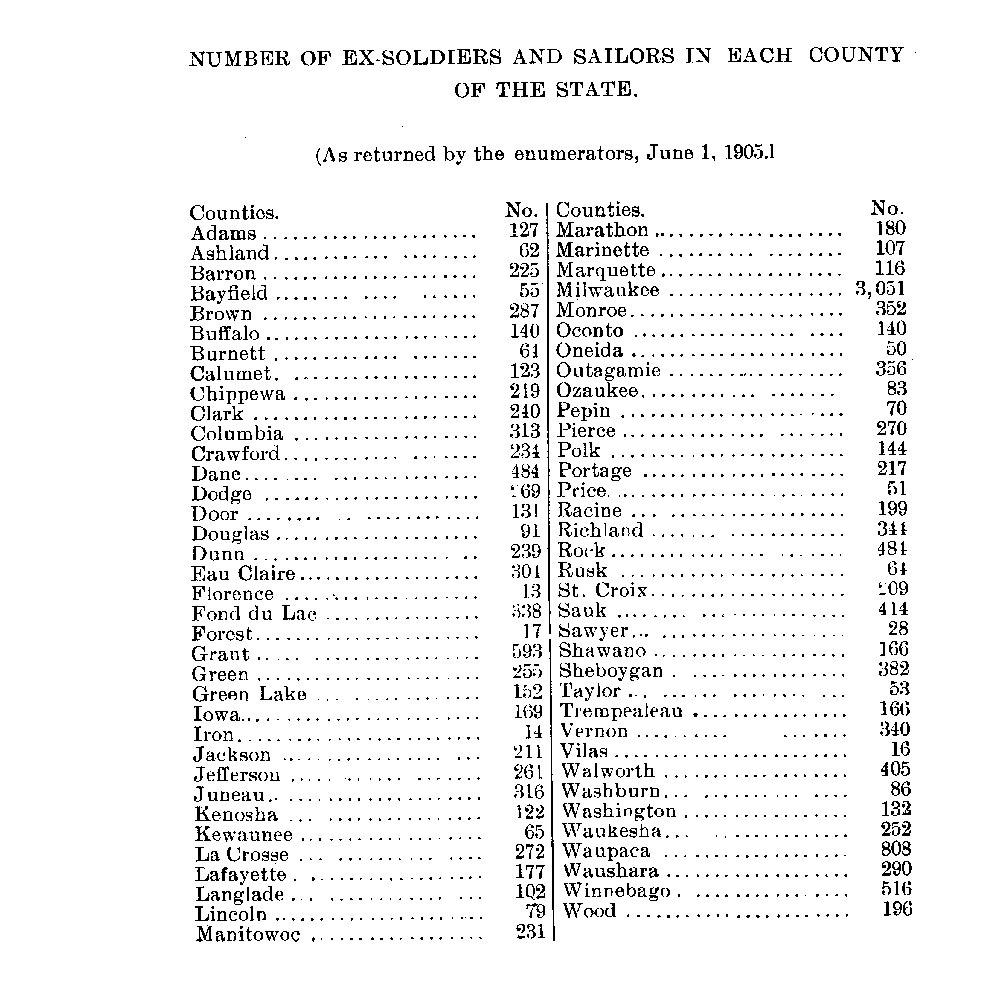
Wisconsin Census Reports of Ex- Soldiers and Sailors
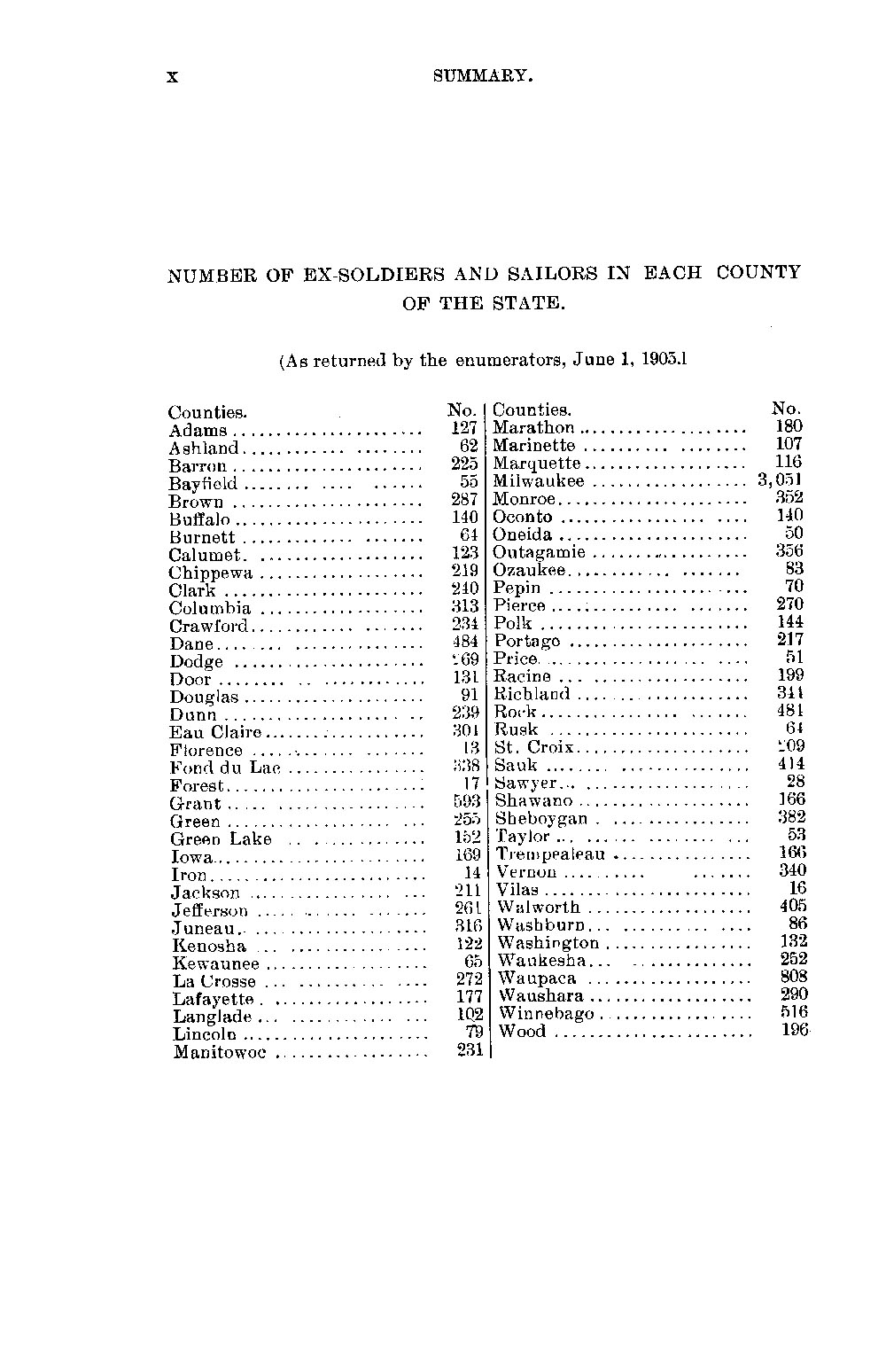
Wisconsin Census Reports of Ex- Soldiers and Sailors
As part of the printed reports of the Wisconsin state censuses of 1885, 1895, and 1905, the state printed a list of ex-soliders and sailors living in Wisconsin at that time. These reports include the names of ex-soliders and sailors who may have served in other states’ regiments.
Civil War Regiments Records
State Archives Civil War Regiment Records (Series 1200)
This State Archives record series (series 1200) contains documents of use to both military historians and genealogists. For many – but by no means all – Wisconsin soldiers, the records contain personal information that is not available in the Red and Blue Books. Included are the Wisconsin Adjutant General's copies of muster-in rolls, descriptive lists, and other federal forms containing information about individual soldiers such as age, birthplace, residence, occupation, and physical description, together with some details about the soldier's service record. For deceased soldiers, there is information on the date, place, and cause of death. For soldiers whose wartime records were incomplete or incorrect, there is postwar correspondence which sought to clarify those ambiguities. Extensive correspondence, orders, manuscript histories, and reports contain information about regimental and company strength and combat experience. In addition to records about all of Wisconsin's infantry, cavalry, and artillery units, the series contains similar information on a number of miscellaneous units including the Iron Brigade, which included three Wisconsin infantry regiments; Co. F of the 29th Regiment, U.S. Colored Troops; Berdan's Sharpshooters (Co. G, First U.S. Sharpshooters); the Milwaukee Cavalry; Hancock's Corps; the Veteran Reserve Corps; various brigade bands; the Permanent Guard at Camp Randall; and recruits for the regular army.
View Catalog Record
Letters, Diaries and Photographs
Letters, Diaries and Photographs
The Wisconsin Historical Society Archives includes letters, diaries, documents, and photographs from soldiers and civilians who experienced the U.S. Civil War. The collections come from over one thousand different individuals. The Society has collected these materials since the end of the war in 1865, and they are described in our online catalog.
View Resources in Catalog
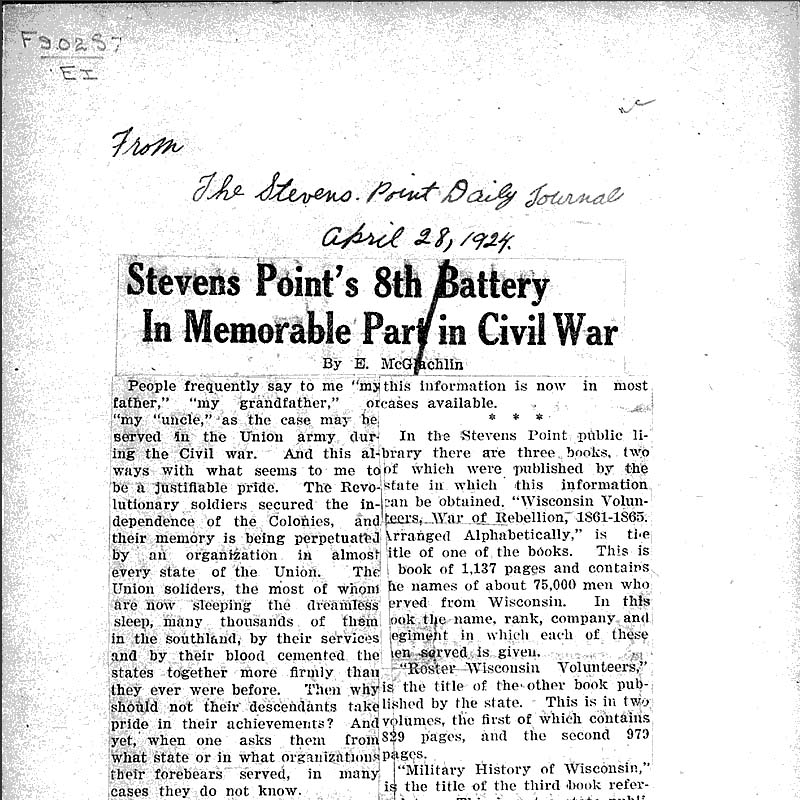
Edwin Bentley Quiner Scrapbooks

Edwin Bentley Quiner Scrapbooks
During the Civil War, Edwin Bentley Quiner collected newspaper clippings concerning the activities of Wisconsin Regiments in the war. Most of the clippings consist of correspondence addressed to a particular newspaper or to family and friends from men on the fields of battle. At the of the war, Quiner arranged the clippings by regiments and pasted them into scrapbooks. The scrapbooks provide insight into the spirit as well as the struggles of the combatants.
E.B. Quiner also wrote one of the most frequently cited book about Wisconsin's role in the Civil War, Military History of Wisconsin: A Record of the Civil and Military Patriotism of the State in the War for the Union.

Library Resources

Library Resources
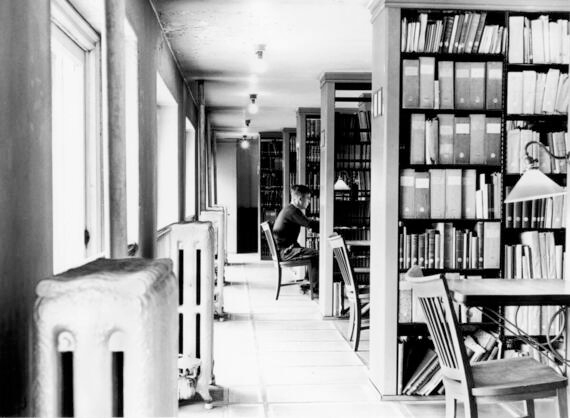
Researchers can find over 10,000 resources available for use in the Society's reading room. These include historic and modern pamphlets, scholarly books, magazines, journals, published memoirs, etc. Some of these items circulate, while others are available in the reading room only.
View Resources in Catalog
Collections Use FAQs
Explore how you can find, access, and use our collection materials.
The Society's library and archives collections can be searched in the University of Wisconsin-Madison Library catalog and some parts of our collections have been digitized and are available online.
The Society's historical object collection cannot be searched online.
Library & Archives
Many books, bound periodicals, microforms and government publications may be checked out for home use with a library card. Rare, fragile, small and heavily used materials (including genealogical resources) do not circulate. A borrowing card is not required if you want to use materials within the Library. Archival materials are available for use in our Archives Reading Room.
For more information about our borrowing policies Library & Archives Services.
Historic Objects
If you are interested in viewing our historical objects please contact us.
Due to significant demands associated with developing the Wisconsin History Center, the Society has reduced capacity to handle loan requests. Therefore, we are not accepting new requests at this time.
For a credit line: Wisconsin Historical Society, Creator, Title, Unique Identifier.
The Unique Identifier can be found at the top or bottom of the webpage for each item. The name of a downloaded file is NOT the unique identifier.
For bibliographic citations please consult the UW-Madison Libraries Citation Research Guide to ensure compliance with appropriate style guidelines.
-
Personal use (prints, gifts, home and study): Request images for personal use
-
Commercial use (public display, publishing, media, products, film and more): Request commercial use of our Collection
Materials in our websites and digital collection are provided for research, teaching, and private study. The Wisconsin Historical Society hold rights to some items; others may be governed by additional copyright or donor restrictions.
We encourage users to download low-res images from our website for personal or classroom use, without written permission, within the meaning of the principles of “Fair Use.”
Permission is required for reproduction, publication, or commercial use of any content made available through our websites and digital collection. By using this website, including our digital collections, you agree to the Terms of Use. Users are responsible for determining whether their intended use qualifies as fair use under U.S. copyright law. When relying on fair use, cite the source.
Visit Our
Library & Archives
Perhaps the best way to begin exploring our collections is by visiting us in person. In our reading rooms, you’ll find free and unparalleled access to our collections, helpful staff and amenities, and perhaps, your very own story.
Plan Your Visit Hours
Donate to The Society's Collections
Your Story is Wisconsin's Story
History is made every day, everywhere. Since 1846, contributions from people across the state have helped us fulfill our mission to collect, preserve and tell the stories of Wisconsin.
Find Out How