Picturing History


Grades 4-7
30-60 min
Discover the people, places, and legends that made Wisconsin history in these grade level essays!
Objectives
Enduring Understanding
Storytelling is and has been the primary means of transmitting learning throughout human history. Reading the stories of the people, places, and events of the past helps us gain important insights into the world as it existed.
Essential Questions
- Who (or what) are the main subjects and where did they live (or originate)?
- What challenges did they face and how did they respond?
- How are these stories relevant today?
- Why are myths and legends an important part of history?

Stephen Bonga

Discover the amazing life of Stephen Bonga, voyageur and interpreter.
Voyageur. Fur trader. Hunter. Trapper. What comes to mind when you read those words? What do you see? Maybe you see a young Ojibwe trapper setting snares. Or do you see a huge canoe filled with twenty men crashing down the Mississippi River? Or maybe you’re picturing... a top hat?
What was the fur trade? It was a time in Wisconsin’s history when nearly every person in the region was involved in the buying, selling, trading, hunting, and trapping of animals for their fur. Native and non-native hunters and trappers traded pelts for European goods such as metal tools, muskets, glass beads, mirrors, and much more. Beaver pelt was the most valuable pelt of the era. It was used to make waterproof top hats that were very popular in Europe. And Stephen Bonga was one of the best traders of his time.
Stephen’s grandparents were Jean and Jeannie (also spelled Jeanne and Jeanie) Bonga. Jean and Jeannie were enslaved Black persons who were freed in 1787. Their son Pierre and his wife, Ogibwayquay, had Stephen in 1799. Stephen was an enrolled member of the Fond du Lac Band of Lake Superior Chippewa. This meant that the United States government and the Ojibwe nation recognized his tribal membership.
Stephen was sent to school to become a missionary, but he eventually quit and returned home. Instead, he became an interpreter and a fur trader, both very much in demand. As a fur trader, Stephen dealt with both the voyageurs who transported goods in giant canoes and the hunters and trappers who provided the pelts. Being fluent in English, French, and Ojibwe meant that Stephen could help each side bargain with and understand the others. As an employee of the American Fur Trade Company, he was put in charge of the trading post on Basswood Lake for five years. His skills were also important to the US government. Stephen Bonga helped negotiate the 1837 White Pine Treaty at Fort Snelling, Minnesota, where the Ojibwe people ceded ownership of thousands of acres of land, but not their rights to use that land.
Perhaps the greatest trial of Stephen’s life would be the Sandy Lake Tragedy during the winter of 1850. Stephen accompanied his wife, also an Ojibwe tribal member, to Sandy Lake, Minnesota, where the US government had promised to provide food and pay money owed to the nation. When the Ojibwe arrived, there was nothing there for them. No food and no payments. Winter was coming. Diseases ran through the camp. The Ojibwe people were starving to death, hoping for the government to keep its promises. The survivors decided to return home. With the rivers and lakes frozen over, they had no choice but to walk. This walk became known as the Wisconsin Death March. Over four hundred Ojibwe died of starvation, disease, and exposure.
Stephen survived. He later left the fur trade and became a guide and interpreter for the painter Eastman Johnson. The famous artist traveled the Great Lakes region painting the lifeways of the Ojibwe people. Stephen Bonga died in 1884 near his birthplace at Park Point. He was a well-respected African American member of both the Native and non-native communities of the Minnesota–Wisconsin border region.
Reading Level Correlations
- Level Z (7th Grade)

Arthur Davidson and Bill Harley

Engage with the history of Arthur Davidson and Bill Harley, the boys who built the world's most famous motorcycle company.
Do you love the sound of motors? Do you like to take things apart and put them back together? Bill Harley and Arthur Davidson did. They loved to work with motors. They loved it so much that they became world-famous for building a better motorcycle.
Bill and Arthur were close friends and grew up in Milwaukee, Wisconsin. They did what many kids still do. They fished, went to school, and rode their bikes. But pedaling a bike wasn’t easy. They wondered, was there a way to “take the work out of bicycling”?
In 1895, E. J. Pennington drove one of the world’s first motorcycles down the streets of Milwaukee. Even though it didn’t run very well, it was enough to spark ideas in the heads of the two friends.
As young adults in their twenties, Bill and Arthur began to make their dreams into reality. Bill went to work as a draftsman at an electrical motor shop. Arthur worked at the same shop as a pattern maker. In 1901, Bill Harley came up with plans for a bicycle with an engine. He and Arthur moved their work into a shed in the backyard of Arthur’s family home and got to work. They were on their way to building a better motorcycle!
Bill and Arthur were joined by Walter Davidson, Arthur’s brother and a machinist. Walter had access to the special tools needed to create motorcycle parts. It took years to get it right. Other Wisconsin inventors like Ole Evinrude helped them make their motor work better. When they had the motor just right, they started selling motorcycles. The Harley-Davidson Motor Company was born! Though they had only five motorcycles to sell in 1903, better times weren’t far off. William Davidson, Arthur’s oldest brother, joined the friends in 1908, and the Harley-Davidson team was complete.
Walter Davidson was not only a talented machinist. He was also an excellent motorcycle rider. Walter loved to race his Harley-Davidson motorcycle. His race wins made people want to buy their motorcycles.
The team had come a long way from the Davidson family shed in the backyard. Bill and Arthur both stayed with the Harley-Davidson Motor Company for the rest of their lives. Bill died in 1943, and Arthur died in 1950. Their company made thousands of motorcycles every year. Today, people all over the world ride Harleys! Bill Harley and the Davidson brothers built a better motorcycle, and the world noticed.
Reading Level Correlations
- Level Z (7th Grade)
Harley Davidson Coloring Sheet

Mildred Fish-Harnack

Uncover the past of historian, spy, and author Mildred Fish-Harnack!
"I look up from my book of rondels At the gray silhouette of a painter Against the many-paned windows. How like are we, I thought, To painters standing on a ledge, Painting the mullions of life's windows; Never pressing close enough to the dark glass To peer within." — Mildred Fish, "In The Library"
Mildred Fish-Harnack was a poet, a storyteller, and a teacher. Why did she become a spy during World War II (WWII)? Simple: It was the right thing to do.
Mildred Fish was born in Milwaukee, Wisconsin, in 1902. As a young girl, Mildred learned how to read, write, and speak in both German and English.
In 1921, Mildred started college in Madison. She studied English literature and loved writing poems and stories. In 1925, Mildred graduated from college. She returned the next year for her master’s degree. In 1926, she met Professor Arvid Harnack, her future husband. Arvid was from Germany and teaching in the United States. They were married in 1928, and a year later they moved to Germany.
The Great Depression began in 1929. It was a crisis that affected nearly everyone in the world. People lost their life savings. Jobs were hard to find. Banks closed. Many people all over the world went hungry.
In Germany, things were very hard. The country was bankrupt and struggling even before the Great Depression. Germany had been forced to pay huge sums of money to other countries it had invaded during World War I. Many Germans were unhappy and wanted someone to blame. They turned to the National Socialist (Nazi) leader Adolf Hitler. He unjustly blamed Jewish people for all of Germany’s problems. When he became leader of Germany, he imprisoned and murdered Jewish men, women, and children. This was called the Holocaust, and millions died. In 1939, Germany invaded Poland, and WWII began.
Mildred and Arvid joined other men and women in the resistance to fight against Nazi rule in Germany. They had many friends. Together, they formed a spy group called the Red Orchestra. Because Mildred and Arvid were communists, they decided to help the Soviet Union, a wartime ally of the United States.
Between 1940 and 1942, Mildred and Arvid secretly sent messages to the Soviets. They reported on the strength of Germany's air force. They even knew how many fighter planes Germany could build each month! They warned of Nazi attacks and reported how much fuel and weapononry German armies had. This information helped Russian forces survive long enough to defeat the Nazis. In August 1942, the Nazis captured a Soviet spy. The spy told the Germans all about the Red Orchestra. Mildred, Arvid, and 116 other people were arrested.
Arvid and Mildred were put on trial in Germany in December 1942. They were found guilty of espionage (spying). Arvid was sentenced to death and Mildred was sentenced to four years in a prison camp. But because she was an American spy, Nazi leader Adolf Hitler wanted to make an example out of her. He ordered the court to change Mildred's sentence to death. The judges did what he wanted.
Mildred spent her last month in prison doing what she loved, reading and translating poetry. She was killed on February 16, 1943. Her last words were, "And I have loved Germany so much."
Mildred Fish-Harnack is celebrated in Wisconsin on September 16. She was an amazing woman and a true hero to all the people whose lives she helped save.
Reading Level Correlations
- Level Y (6th Grade)
Mildred Fish-Harnack Coloring Sheet
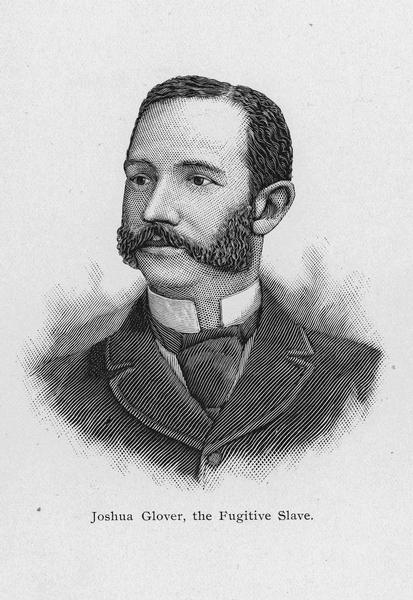
Joshua Glover
Learn about Joshua Glover, who escaped enslavement and made a new life for himself.
Being born into slavery meant you would be enslaved for the rest of your life. What would you do? Would you try to escape? That's what Joshua Glover did. He would live free or die trying.
In 1850, there were more than three million enslaved black men, women, and children in the southern United States. Slavery had existed in the United States for hundreds of years.
Between 1810 and 1820, Joshua was born in the United States of America. At some point in the past, Joshua’s ancestors were taken from their African homeland and sold into slavery. As an enslaved person, Joshua had no rights. It was against the law for someone to teach him how to read and write. He could be beaten or even killed for no reason at all.
On New Year’s Day in 1850, Joshua's enslaver sold him to a man named Benammi Stone Garland from St. Louis, Missouri. Joshua was forced into hard labor on Garland's farm. He hand-split logs into rails and built fences around the pastures. He tended the farm animals and worked in the fields and orchards. Then one night in 1852, he escaped!
No one knows exactly how Joshua escaped or what paths he took. We do know that he headed north to Wisconsin. Wisconsin was a free state where there was no slavery. It took weeks to get from St. Louis, Missouri, to Racine, Wisconsin, on foot. In Wisconsin, Joshua got a job, found a place to live, made some friends, and settled down. He thought he was finally free. But a law called the Fugitive Slave Act threatened that freedom. The Fugitive Slave Act allowed for formerly enslaved persons to be recaptured and taken back south.
In March 1854, slave catchers found out where Joshua was living. Led by Benammi Garland, they surprised Joshua in his cabin at night. After a short fight, they threw him in the back of a wagon. They drove through the foggy night to Milwaukee, where they put Joshua in jail. They planned to take him back to St. Louis the next morning, but they never got the chance. Abolitionists, people would wanted to end slavery, had other plans.
By the next day hundreds of people had gathered at the courthouse. Sherman Booth, an abolitionist leader, encouraged the mob to take action and free Joshua Glover! The mob stormed the jail the next morning. They battered the door to Joshua's cell and put him in a buggy to help him escape. He spent over a month moving from safe house to safe house along the Underground Railroad. The Underground Railroad wasn't a railroad at all. It was a system of homes and people that helped freedom seekers as they made their way to safety. Many men and women risked everything they had to defy the Fugitive Slave Act and keep Joshua safe.
Joshua spent many nights fearing that he would be enslaved again. After nearly forty days on the run, Joshua was put aboard a steamboat headed to Canada. He was finally free!
Joshua lived the rest of his life in Canada as a free man. He did what free men and women around the world do. He found a job. He found a place to live and he made friends. He got married. Joshua lived the life he chose for himself.

Father James Groppi

Stand with Father James Groppi, the Catholic priest who led fought for justice in Milwaukee's Inner Core.
What does it mean to be brave? For Father Groppi, it meant being an ally to members of his church and neighborhood.
James Groppi was born in Milwaukee on November 16, 1930. His parents emigrated from Italy. James grew up near Milwaukee in Bay View, Wisconsin, where he went to high school. He had eleven brothers and sisters and worked at his parents’ grocery store. He wanted to become a Roman Catholic priest, so after high school he went to seminary school. James paid for seminary by driving buses in Milwaukee. After he graduated, Father Groppi worked at St. Boniface Church in Milwaukee’s Inner Core.
The Inner Core was a neighborhood on Milwaukee’s north side. Most of its residents were African Americans. The leaders of Milwaukee refused to pay for repairs to the roads and schools in the Inner Core. Homes were falling apart. Schools were neglected. There weren’t many jobs. White landlords would not rent to Black people outside of the Inner Core. Black families could not buy homes in other parts of the city. Systemic racism limited Black people’s chances for a better life.
During the 1960s, activists protested against the unfair treatment of African Americans. These protests were part of the civil rights movement. Father Groppi marched with southern civil rights leaders like Dr. Martin Luther King Jr. His time in the South helped convince Father Groppi that changes were needed back home in Milwaukee too.
Father Groppi became an advisor to the Youth Council of the NAACP (National Association for the Advancement of Colored People). The NAACP used nonviolent protests to demonstrate against unfair housing laws. People wondered why a white priest cared so much about equal rights for Black people. Father Groppi loved all members of his parish. He believed everyone, no matter the color of their skin, should be treated fairly.
Riots broke out in Milwaukee in 1967, and four people were killed. Something had to change. Father Groppi and Vel Phillips led protestors and civil rights workers for two hundred nights of marching. Vel was on the Milwaukee City Council. She was trying to get a Fair Housing Law passed so African Americans could live where they wanted to live. Night after night, the group marched from the Inner Core and crossed the 16th Street Bridge. Every night their march ended in South Milwaukee. Angry white men and women lined the streets. They swore at the marchers and threw rocks and bottles at them.
In 1968, Milwaukee finally passed Vel Phillips’s Fair Housing Law. But Father Groppi did not stop helping people. He marched for people on welfare. He marched for American Indian rights. He marched to end the war in Vietnam.
Eventually, James Groppi left the priesthood and got married. He and his wife, Peggy Rozga, had three children. He went back to driving buses in Milwaukee. After he died, the 16th Street Bridge was renamed the James E. Groppi Unity Bridge in his honor. Father Groppi never stopped helping people get where they needed to go.
Reading Level Correlations
- Level U (5th Grade)
Father Groppi Coloring Sheet

Cordelia Harvey

Explore the history of Cordelia Harvey, the "Wisconsin Angel.
"I would not exchange the memory of their grateful faces and their heartfelt ‘God bless yous’ for anything in this world." – Cordelia Harvey
One day you're a schoolteacher, the next day you're the first lady of Wisconsin. How did Cordelia go from teaching children their ABCs to meeting President Abraham Lincoln? And how did she earn the nickname "Wisconsin Angel"?
Cordelia Adelaide Perrine was born in upstate New York in 1824. Her family moved to Kenosha, Wisconsin, in 1840. She became a schoolteacher when she grew up. In 1847, she married Louis Harvey. Louis was interested in politics. By 1861, he was governor of Wisconsin. Sadly, his time as governor didn't last long.
The United States Civil War had started in 1861. Soldiers from Wisconsin went to fight for the Union in the war. Sometimes hundreds or even thousands of soldiers could be killed or wounded in a single battle. Wounded soldiers were sent to hospitals in different parts of the country. In 1862, Governor Harvey was visiting wounded Wisconsin soldiers when he fell from a steamboat into the Tennessee River and drowned. Cordelia Harvey had been first lady for only ninety-four days. She knew how important those visits were to the soldiers. Cordelia made up her mind to keep visiting them. Her decision changed the lives of people from Wisconsin for the better.
She toured battlefields and inspected military hospitals. Hospital care during the Civil War often did more harm than good. Hospitals were dirty and overcrowded. Many patients had to sleep outside in tents. There were never enough doctors or nurses. Diseases killed more soldiers than bullets!
Cordelia worked to change all of this. She wrote letters to the new governor of Wisconsin to ask for more doctors and nurses. She asked families to send food, blankets, clothing, and other supplies. She kept visiting hospitals and bringing gifts and news from home. Because Cordelia often wore a cape with a black hood when she traveled, soldiers would recognize her and ask for help. Cordelia even helped the soldiers that were prisoners of war. Cordelia’s kind acts led to her being called the Wisconsin Angel.
Wisconsin didn’t have any military hospitals. Cordelia knew that Wisconsin needed one of its own. She started a petition that was signed by over eight thousand people! They all wanted a hospital built in Wisconsin for their soldiers. Cordelia took the petition to President Abraham Lincoln. She convinced the president that soldiers would feel better and heal faster near home. Soon there were three hospitals in Wisconsin. One was in Madison, one in Milwaukee, and one in Prairie du Chien.
Later these hospitals became orphanages. They cared for the children of soldiers killed in the Civil War. Cordelia Harvey died in 1895. She will always be remembered as Wisconsin's Angel.
Reading Level Correlations
- Level Z (7th Grade)

Belle Case La Follette

March with Belle Case La Follete, women's suffrage activist and wife of Bob La Follette.
No voting. No owning a house or land. No wearing pants (dresses only!). That’s what life was like for women in the nineteenth century and before. Luckily, Wisconsin had many brave women and men who fought to change the rules for the better. One of these women was Belle Case La Follette.
Belle Case was born in Summit, Wisconsin, in 1859. Back then women didn’t have the right to vote. Belle set out to change that. When the world said, "No, you can't," Belle said, "Yes, I can!"
Belle’s grandmother, Lucetta, believed Belle deserved a good education. She helped Belle understand she could do anything she put her mind to. Belle was never late for school and missed class only when she had the measles. While most children didn't go to school past the age of twelve, Belle kept going. Belle started college when she was only sixteen. She wanted to make her family proud. Belle was a top student at UW–Madison. She met her future husband, Bob La Follette, while they were both students there.
Belle and Bob were very different people. Bob loved speaking in public. Belle loved writing. But they believed in many of the same progressive ideas. Together, they made a great team! Bob went into politics after they were married. Belle helped write many of Bob’s best speeches. Bob called her the brainiest member of the family!
Bob and Belle started La Follette's Magazine in 1909. Belle wrote stories about modern life, women's rights, exercise, and clothing. She dressed how she wanted to and encouraged other women to do the same. Belle believed women should make decisions for themselves.
Belle also wanted more people to exercise. She encouraged exercise as part of a healthy lifestyle. Belle loved to run, and she was fast! An old story tells how Bob once challenged her to a footrace. Who won? Who knows? Bob never told.
Many people at that time thought women should stay home and raise families. But Belle believed women could have a career and raise a family, too. Belle had three children of her own and knew what she was talking about.
Belle believed women should have the right to vote. She gave more than seventy speeches on women's suffrage. Her greatest victory came in 1920 when women won the right to vote. That's when the 19th Amendment to the Constitution was ratified.
Belle also believed that African Americans deserved civil rights. She defended the rights of African Americans. And Belle believed world peace was a lot better than world war. As a pacifist, Belle believed that no wars were justified. She encouraged political leaders like her husband Bob (Senator Robert LaFollette) to vote against going to war.
Belle Case La Follette fought hard for the things she believed in. She died in 1931 after a lifetime of doing her part to make the world a better place.
Reading Level Correlations
- Level U (5th Grade)

Aldo Leopold

Discover the history of ecologist and University of Wisconsin professor Aldo Leopold.
Have you ever wondered about the natural world that surrounds us? Why are there so many rabbits? What happens when a stream gets polluted? Where do birds go when they fly south? Aldo Leopold was curious about the world. He set out to take care of it and to teach others how to do the same.
Aldo Leopold was born on January 11, 1887. He grew up near the Mississippi River in eastern Iowa. Aldo loved to spend his time outdoors hunting and fishing.
Aldo went to college to study forestry. After he graduated, Aldo joined the US Forest Service. He worked in national forests in the southwestern United States. His job was to help manage wildlife populations.
Aldo discovered something important about nature. Many scientists thought that killing predators would increase the number of prey animals like deer. Aldo disagreed with the idea that larger herds were better. Larger herds could destroy a grazing area, causing starvation and disease. He thought that predators, such as wolves, make herds of deer stronger. Predators do this by eating weak and sick animals. The animals that survive are stronger and able to survive hard winters or bad droughts. He also connected his ideas about animals to the environment they lived in. He believed that proper management of the wilderness meant keeping it as diverse as possible.
Wildlife biologists now agree with him. Aldo’s ideas changed the way scientists think about the natural world. He even wrote the book that helped shape wildlife management as it exists today.
Aldo and his family moved to Madison in the early 1920s. He became a professor at UW–Madison. Aldo's family had a cabin in Baraboo. They called it “The Shack.” He took careful notes about the plants and animals he saw there. He also observed how people affected the environment. Aldo even has a type of bench named after him. You may have sat on one in a park or on a nature trail.
In 1949, his most famous book, A Sand County Almanac, was published. In it, Aldo wrote that people needed moral rules telling them how to treat the environment. His essay “The Land Ethic” describes a caring relationship between people and the plants and animals that make up the world around us.
Sadly, Aldo Leopold died in 1948, a year before his book was published. The ideas he left behind forever changed the way people think about the world and our place in it.
Reading Level Correlations
- Level X (6th Grade)

Chief Oshkosh of the Menominee
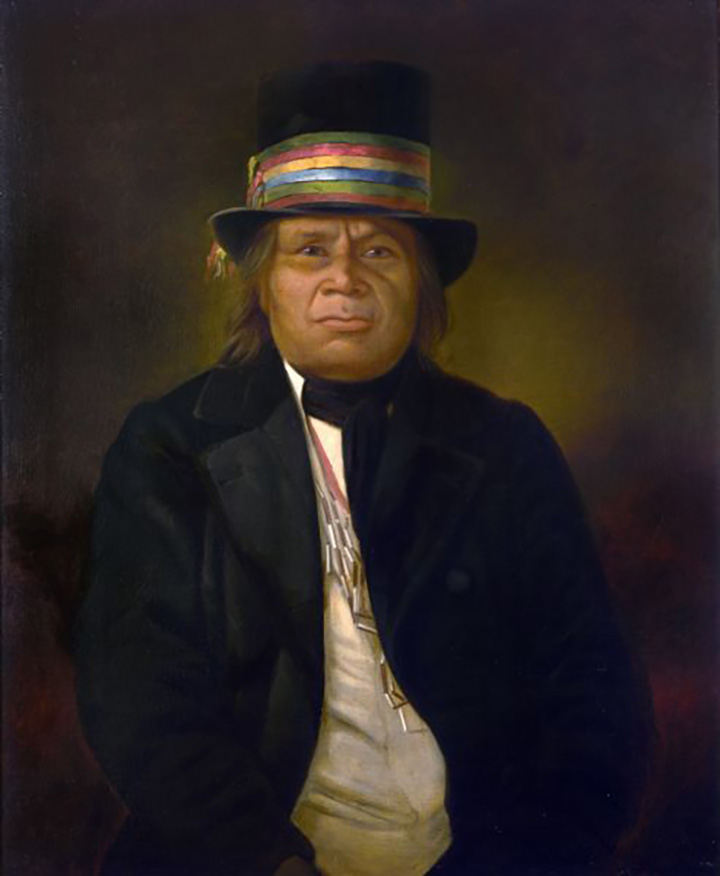
Take a stand with Chief Oshkosh, former leader of the Menominee Nation.
“Start in the west, make your circle by taking only the sick and mature trees, yet, keep in mind by taking care of the other creatures and leaving it as you first came, as so when you make your circle to the point of the start, you then will again have another stand ready for you on your next circle. For it is truly this circle, if we take care of her, Mother Earth, for it is true that she will always be there to take care of you!” Chief Oshkosh of the Menominee
Have you ever heard of the Trail of Tears? It's about a terrible time in the 1830s when the United States government forced many Native Americans to leave their homes. They had to travel hundreds of miles on foot to reach new reservation land in Oklahoma. Many thousands died from disease and starvation along the way. Fast forward 20 years and now the Menominee nation was being forced out of Wisconsin. Their leader, Chief Oshkosh, said no. There would be no Trail of Tears for the Menominee.
When Chief Oshkosh was born in 1795, the Menominee controlled over 10 million acres of land. Back then, there wasn’t any state called Wisconsin. The future state was part of the Northwest Territory. Many states would be carved out of it.
The Menominee hunted animals such as buffalo and deer, and speared sturgeon in the Wolf River. They also gathered wild rice and had small farming plots of squash, beans, and corn. Their homes were wigwams, birchbark houses, and lodges. They lived in and near the forests that grew all around them.
At the age of 17, Oshkosh and a band of Menominee warriors sided with the British against the United States. The War of 1812 ended with an American victory over the British and their allies. In future battles, the Menominee sided with the United States. In 1832, the Menominee sent warriors to help track down and capture Black Hawk and his British Band.
In 1822, tribes from the eastern United States came to Wisconsin. They needed land and bargained with the Menominee for it. When mistrust developed between the tribes, the US government stepped in. The US needed one person to speak for each tribe. The Menominee chose Oshkosh.
Chief Oshkosh faced many difficulties. Again and again, federal agents from the government demanded land from the tribe. Chief Oshkosh had little choice but to keep giving up territory. By 1848, the Menominee had handed over 7 million acres to the US government. But it still wasn't enough.
Wisconsin was on the verge of becoming a state. The federal government wanted to move the Menominee off their land and into Minnesota. The land offered was called Crow Wing country. Chief Oshkosh agreed to go and see the new territory. Meanwhile, his people moved to an area near Keshena Falls on the Wolf River. When Oshkosh returned, he knew in his heart that his people would not survive in the Crow Wing country. The Menominee would be caught in the middle of two warring native nations! Instead, the Chief and his people refused to leave.
For 6 years, the federal government kept pushing for the Menominee to leave. Chief Oshkosh and his people said no. Finally, the federal government gave in. The Menominee stayed right where they were, just 60 miles south of there on the Wolf River. Chief Oshkosh and the Menominee were left with less than 300,000 acres. With proper care, the land was preserved for generations of Menominee. Today, their reservation can be seen from space!
Chief Oshkosh died in 1858, ten years after Wisconsin became a state. His life is a testament to the will of the Menominee people to stay forever on their ancestral lands.
Reading Level Correlations
- Level Z (7th Grade)

Doctor Kate Pelham Newcomb

Trek through the northwoods with Doctor Kate Pelham Newcomb, founder of the Million Penny Parade.
What do you want to be when you grow up? A journalist? A computer programmer? Kate Pelham wanted to be a doctor. What inspired her? In Kate Pelham's case, it was a personal tragedy that changed her life.
Kate Pelham was born in 1885. Sadly, her mother and baby brother died when Kate was very young. She didn’t think it was right that she lost her mother. Kate decided to become a doctor and work to save people’s lives.
Kate’s father didn’t think being a doctor was a proper career for a young woman. In 1911, Kate became a teacher instead, but she wasn’t very happy. In fact, she didn't even get to be a teacher for long. When her stepmother died, Kate had to return home to take care of her family. That made her even more miserable. Finally, after 8 long years, her father finally saw how badly Kate wanted to be a doctor. He gave his approval, and Kate went to medical school.
In 1917, Kate opened her own medical practice in Detroit, Michigan, where she met her future husband, Bill. Bill had a problem with his lungs. The polluted air was making him sick, so Bill moved to the cleaner air of Boulder Junction, Wisconsin. Bill’s health mattered more to Kate than her clinic. Kate left behind Detroit and her doctor’s license to be with him.
Dr. Kate Pelham Newcomb would visit her patients in the snow, even in blizzards.
When Kate moved, she left behind her city life. She chopped wood, hauled water, cooked meals, and took care of her family. In 1928 their son Tommy was born. One day, Tommy hurt his finger pretty badly. Kate cleaned it up and took Tommy to the town doctor. Just by looking at the expertly wrapped finger, Dr. Torpy knew Kate had talent. He told Kate she was wasting her skills as a doctor.
Late one winter night, Dr. Torpy called Kate. A woman was very sick and Dr. Torpy couldn’t get to her. Kate would have to go. Even though Kate had no medical license, off she went through the blizzard. She saved that woman’s life. When she got back to see Dr. Torpy, she told him she was going to Madison to renew her license. Dr. Kate was back!
Dr. Kate even had her own vehicle for getting through northern Wisconsin blizzards.
Once, when her canoe sunk in an icy river, Dr. Kate waded to shore and trekked cross-country the rest of the way. She delivered over 3,000 babies and never lost a mother. Dr. Kate became a hero to the people of northern Wisconsin.
Kate dreamed of doing even more. The nearest hospital was miles away from Kate's hometown. Wouldn't it be wonderful to have one nearby?
One day, Kate saved the life of Josephine Rubloff. The Rubloffs were very wealthy, and they asked what they could do for her. Kate told them about her dream of building a hospital. The Rubloffs donated $1,000. Soon, the whole town was involved in raising money for the hospital.
Local high school students started the Million Penny Parade and raised thousands of dollars. Kate appeared on the popular TV show "This Is Your Life".
Dr. Kate managed to raise enough funds to build a hospital and in 1954 Lakeland Memorial Hospital opened its doors.
Dr. Kate died in 1956, only two years after her hospital was completed. She fell and broke her hip, and her heart gave out during surgery. Dr. Kate Pelham Newcomb changed the lives of the people of Wisconsin. You can visit the museum dedicated to telling her life story in Woodruff, Wisconsin, near the original site of the hospital she helped build.
Reading Level Correlations
- Level S (4th Grade)
Kate Pelham Newcomb Coloring Sheet

Vel Phillips

Stand with Vel Phillips, the first African American woman to become a judge in Wisconsin.
"Live where you want to live." - Vel Phillips
You graduated from college, you have a good job, and you are looking for your first apartment. It’s an exciting time! But when you meet the landlord, they turn you away because of the color of your skin. Would you let racists tell you where and how to live? Or would you fight for change like Vel Phillips did?
Velvalea Rodgers was born in Milwaukee on February 18, 1923. Vel was a great student and earned a scholarship to attend Howard University in Washington, DC. She graduated from college in 1946. In 1947, she met and married Dale Phillips. Together, they went to law school. Vel graduated from the University of Wisconsin–Madison Law School in 1951. She and Dale moved to Milwaukee to start a business and raise a family.
Vel and Dale both experienced systemic racism in Milwaukee. White people made it very hard to find work or places to live outside of a small area in Milwaukee called Bronzeville. Bronzeville was a neighborhood on the city’s north side. Most of its residents were African Americans. The leaders of Milwaukee refused to pay for repairs to the roads and schools within the community. Schools were neglected. There weren’t many jobs. White landlords would not rent to Black people outside of Bronzeville. Black families could not buy homes in other parts of the city. Something had to be done.
Vel wanted to make people’s lives better, so she decided to run for office. She knew it wasn’t fair that people could not live, work, and go to school where they wanted because of the color of their skin. She believed that everyone should “Live where you want to live.” Vel ran for a seat on the school board. She won the primary, but she lost the election. It was the first time an African American woman had won a primary! She didn’t stop there. In 1956, Vel won a seat on the Milwaukee City Council. Vel became “Madam Alderman” and went to work for the people of Milwaukee.
Vel first proposed her Fair Housing Law in 1962. The law would make it illegal to discriminate against people because of the color of their skin when renting or selling homes. The law was voted down six times. Activists began protesting against the unfair treatment of African Americans.
Vel participated in nonviolent protests. Still, she was eventually arrested at a rally. Vel and Father James Groppi led protestors for two hundred nights of marching. Night after night, they marched from the Inner Core and across the 16th Street Viaduct. Every night their march ended in South Milwaukee. Angry white men and women lined the streets. They swore at the marchers and threw rocks and bottles at them. Mayor Maier tried to stop the marchers with a curfew. Tensions rose between the protestors and the police. The National Guard was called in. Finally, in 1968, the city council passed a Fair Housing Law for the city of Milwaukee. The marchers had won!
Vel Phillips’s career included many “firsts.” She was the first Black woman to graduate from UW-Madison’s law school. First to win a seat on Milwaukee’s City Council. First to be an appointed judge in Wisconsin. First to become Secretary of State for Wisconsin (or anywhere in the US). Even though she passed away in 2018, the Vel Phillips Foundation still works to help people achieve their dreams.
Reading Level Correlations
- Level X (6th Grade)
Vel Phillips Coloring Sheet

Margarethe Schurz

Learn the history of Margethe Schurz, founder of the United States' first kindergarten.
Today, nearly all children in the United States attend kindergarten. They learn numbers, the alphabet, they finger paint, and many even have snacks and nap time. But that wasn’t always the case. In fact, kindergarten didn’t even exist when the United States was founded. The first kindergarten in the US was started in Watertown, Wisconsin, in 1856, eight years after Wisconsin became the thirtieth state in the Union.
Margarethe Meyer Schurz was born in Hamburg, Germany. She came to the United States when she was nineteen years old. She and her husband, Carl, first settled in Philadelphia, Pennsylvania, before moving to Watertown, Wisconsin in 1855. One year later, Margarethe started the very first kindergarten in the United States. Where did she get idea? Margarethe learned about the idea of kindergarten in Germany.
In Germany, an educator named Friedrich Froebel had started the first kindergarten for the youngest learners in 1837. Kindergarten is a German word meaning "a garden where children grow." In kindergarten, students learn through playtime and activities. This was very different from traditional schooling.
School in the 1800s was very strict and formal. Education meant memorizing things—lots of things. If you had a good memory, you were a good student. Entire classes had to memorize and repeat whatever the teacher said! There was little time set aside for play during the school day.
Kindergarten focuses on social skills, like learning how to behave around other people. Children in kindergarten learn by playing games and singing songs. They work together in groups. Students have fun while they learn. Children in kindergarten still learn this way today, though the focus has recently started to shift toward skills like math and reading.
In 1859, Margarethe met Elizabeth Peabody. Elizabeth was a well-known writer and teacher from Salem, Massachusetts. Margarethe described her kindergarten idea to Elizabeth. She loved the idea! She helped start kindergartens all over the United States.
Margarethe was proud of her school. She worked hard to make education better for her community. But she didn’t stay in Wisconsin for long. After her daughter died in 1867, Margarethe decided to return to Germany. Her ideas, though, kept growing long after she had left.
Margarethe’s first kindergarten class had only five students, and they spoke German. Now children all over the United States attend the “garden where children grow."
Reading Level Correlations
- Level S (5th Grade)

The Hodag

Reveal the history of the Hodag, Rhinelander's mystical menace!
At the Oneida County Fair, you pay your nickel and enter the large stall to see a beast called the Hodag. It is so dark inside you can barely see the ticket in your hand!
Slowly, your eyes begin to adjust. In the back of the stall, a dim light shines down on a large, horned creature. Frightening noises seem to come from it. It lifts its head and roars at you! You run out of the tent, scared but satisfied. The hodag is real! Or is it?
The hodag legend comes to us from tall tales told by lumberjacks. It was likely inspired by Wisconsin’s Native American stories of water panthers and other spirit beings. The earliest known print reference to the hodag comes from an 1870 history of Kent County, Michigan. But it would be the small town of Rhinelander, Wisconsin, that would make the hodag world-famous.
What was the hodag? According to folklorist Charles E. Brown, “The ferocious beast had horns on its head, large bulging eyes, terrible horns, and claws. A line of large sharp spikes ran down the ridge of its back and long tail. The Hodag never laid down. It slept leaning against the trunks of trees. It could only be captured by cutting deeply into the trunks of its favorite trees.” It was said to eat “mud turtles, water snakes, and muskrats,” and “it did not disdain human flesh.”
In 1893, timber cruiser and land surveyor E. S. “Gene” Shepard claimed to have captured a live hodag. Beginning in 1895, illustrations from this “capture” were used in advertisements for the Centralia Lumber Company. However, it would take more than drawings for people to accept the hodag as real, and Shepard had a plan.
To draw attention to the small but growing town of Rhinelander, Shepard decided to show a captive hodag at the 1896 Oneida County Fair. With the help of a woodcarver named Luke Kearney, he created his own hodag. They carved the body from wood and covered it with ox hide. They gave it bulging eyes and added twelve cattle horns along its spine. Finally, they added wires so they could move its head. Visitors to the exhibit were told that the hodag ate only white bulldogs, and then only on Sundays. The creature was so successful that stories of Rhinelander’s famous monster traveled nationwide. They even appeared in science journals!
Eventually, Shepard admitted that the hodag was a hoax, but that didn’t stop people from wanting to see it. The town of Rhinelander adopted the hodag as its mascot, and now hodag statues, paintings, and toys can be found all over the city.
Shepard’s hodag may not have been real, but who knows? Perhaps the hodag is still hiding somewhere in the woods, waiting for the right person to come walking by on a Sunday with a white bulldog...
Reading Level Correlations
- Level Y (6th Grade)
Hodag Coloring Sheet

Beware the Tommyknockers!

Unearth the history of the mythical Tommyknockers!
CRAAACCKK!
Deep underground in a mine, the sound of creaking timbers and cracking rock meant it was time to bolt for safety! If you made it out before the cave-in, you could thank the tommyknockers for the warning!
Many of Wisconsin’s early European miners came from Cornwall, England. They had developed their skills in the coal mines of their homeland. These skills made the Cornish miners highly sought after in the lead-mining territory of southwestern Wisconsin.
When people travel from one place to another, they bring with them many things that help them settle into their new homes. This includes practical things, like quilts and tools, but it also includes things that remind them of home, like pictures and diaries.
Miners also brought their traditions with them. They made the pasties, or meat- and vegetable-filled pies, that they remembered from home. They told stories to remind them of their heritage. One of these stories concerned tiny elves who lived in the mines. The knackers, also called tommyknockers or knockers, were sometimes helpful, and sometimes not.
Cornish miners firmly believed in these small, ugly, wrinkled, underground beings. An angry knocker wasn’t something you wanted on your hands. They might steal your tools or cause the vein of lead you were following to suddenly run out. They might even cause a cave-in!
The knockers could also be helpful if you treated them right. After eating lunch, miners often left the crust of their pasty behind for the knockers to eat. Having them in your mine was a good sign because they worked only the best ground. Hearing them might mean you were on the right track to finding mineral riches! Some say the noises the knockers made before a cave-in probably saved many miners’ lives.
Today, miners don’t believe in the tommyknockers. Science and engineering have helped make mining safer, and the knockers have become another piece of folklore from Wisconsin’s past.
Or have they?
CRAAACCKK!
Reading Level Correlations
-
Level Z (7th Grade)
Tommyknocker Coloring Sheet

Paul Bunyan

Discover the history of Paul Bunyan, the legendary lumberjack of the Northwoods!
“Timber!” With a booming crash, the enormous white pine falls to the forest floor. A two-man team swarms over it, removing the smaller branches. Another man wraps a chain around the base of the tree to haul it away on the go-devil, a sled-like machine pulled by . . . a blue ox? Suddenly, a giant man, ten feet tall at least, appears out of the woods. He picks up the giant pine in one hand, and he and his ox Babe head toward the river...
Or at least, that’s a tall tale you might hear about Paul Bunyan, the legendary logger of the Northwoods. Who or what was Paul Bunyan? Did he really exist? If not, where did all those stories come from?
When Europeans first arrived in what is now Wisconsin, over one-third of the land was covered in forests. These forests were a valuable resource that Europeans, and later the Americans, wanted. Native nations in Wisconsin were forced to cede their land to the United States government. With the Native peoples removed from their ancestral homes, the lumber industry grew quickly. Logging companies bought the land and hired men known as timber runners to survey it. Logging crews were sent into the heart of the Wisconsin forests to log the old-growth white pines.
Logging was dangerous and lonely work. Trees were cut in the winter, and lumberjacks stayed at camps in the Northwoods all season long. They worked in freezing temperatures, blizzards, and howling rainstorms. In the spring men surfed floating logs down flooded rivers to sawmills. There wasn’t much in the way of entertainment, so loggers and lumbermen had to invent their own. Telling Paul Bunyan stories was a way to pass the time. Who was the original Paul Bunyan? No one really knows. But plenty of men claimed to have worked with him. Or worked with someone that worked with him. And on and on.
Whoever told the best stories and jokes usually earned the respect of the other lumberjacks in camp. If one storyteller had Paul cutting down a tree with one stroke of his axe, then another might say he took two trees down, one with his first swing, and another on a return swing. Or three. Or five! The stories about Paul Bunyan passed from storyteller to storyteller, each retelling adding a bit to Paul’s legend. This is how folklore grows.
Eventually, people wrote books about Paul Bunyan, expanding on his myth, and made up friends for him. His most famous companion was Babe the Blue Ox. In those later stories Paul went from being a great lumberjack to a magical being! He was so huge he created the Great Lakes with his footprints! He was tired one day and dragged his axe home, accidentally creating the Mississippi River!
You can find Paul Bunyan stories all over the United States, but his home is in the Midwest, where they were first told. As the lantern lights dim and the wolves begin to howl, the lumberjacks gather round the hot wood stove to play cards, make music, and laugh at the crazy stories of Paul Bunyan, the greatest lumberjack of all time. Or so they say.
Reading Level Correlations
- Level W (5th Grade)
Paul Bunyan Coloring Sheet
WisHistory Education
History matters! The Wisconsin Historical Society provides field trips, learning opportunities, civics education programs, teacher professional development and more.
Explore Educational Resources