Women's History in Wisconsin

Wisconsin women have made many contributions to state and national history, yet our textbooks often reduce women’s history to the campaign for suffrage at the expense of everything else. While the right to vote was indeed an important victory for women, it’s just one of many issues that women have sought to change. And while the affluent white women who had time, access to power, and financial resources to invest in that campaign are the best documented in our archives and libraries, Wisconsin women of many races, classes, and ethnic groups left their mark on our history.

Ho-Chunk and Menominee women were the first Wisconsin women. They were joined in the sixteenth century by Ojibwe women, and in the seventeenth century by the Sauk, Fox, Potawatomi, Mascouten, Kickapoo, and Ottawa seeking refuge from wars raging in the east. In the eighteenth century, they were joined by French and Canadian women involved in the fur trade and in the nineteenth century, by American and European women starting new lives on the western frontier. The suffrage campaign was just one episode in a long history of women’s contributions to Wisconsin history.

This page leads to original documents, pictures, eyewitness accounts, and other primary sources available online that reveal the history of Wisconsin women. Besides those linked below, other documents and additional information can be found at Turning Points in Wisconsin History [link].

  1. European Exploration and Fur Trade
  2. White Settlement and Immigration
  3. Civil War Era
  4. Industrialization and Change
  5. Suffrage and World War

1. European Exploration and Fur Trade

Although Indian women have lived in Wisconsin for thousands of years, the earliest written records about them come from European missionaries, explorers, and fur traders who only arrived in Wisconsin less than 400 years ago. For the next two centuries Wisconsin’s economy revolved around the fur trade, bringing French traders, missionaries, and Indians into a complex economic, political, and social relationship that had long-lasting effects. Indeed, many of Wisconsin’s best-known “founding fathers” (and mothers) were part Indian.

Although Indian women are mentioned in passing in the17th-century Jesuit Relations, the earliest record of a specific Indian woman comes from British soldier Jonathan Carver, who visited Wisconsin in 1766-1768. Carver’s detailed account of his journey through the region includes a description of the Ho-Chunk community at modern Neenah, presided over by the female chief Glory-in-the Morning.

The roles played by women in the fur trade varied. Although there were a handful of white women in Wisconsin prior to the nineteenth century, most of them in Green Bay and the Fox Valley, fur traders generally married Indian or metis women. These relationships had practical implications, since they helped traders improve relations with the rest of the tribe and gave access to information on native language and culture that was crucial to a trader’s success. Indian women also provided many of the essentials of daily life, such as dressing furs, making leather, netting snowshoes, and gathering firewood-tasks unfamiliar to many Europeans. Women were essential to the harvesting and preparation of wild rice, as well--a valuable item for barter and a necessary source of food during long winters. These Indian and metis women were more than diplomatic pawns or servants, though, and occupied a unique position between the two cultures that was an integral part of life in early Wisconsin. While the documentary record of these early years is scarce and one-sided, particularly in regard to women, Indian women were visible and important figures in daily life during the fur trade era.

1702: Father Etienne Carheil reveals the darker side of life among French men and Indian women when the fur trade was young
http://www.wisconsinhistory.org/turningpoints/search.asp?id=16

1766: Jonathan Carver visits Glory-of-the-Morning, a female Ho-Chunk chief (on pages 32-38)
http://www.wisconsinhistory.org/turningpoints/search.asp?id=383

1854: A description of the harvesting and cooking of wild rice
http://www.wisconsinhistory.org/turningpoints/search.asp?id=686

1634-1900: The history and significance of wild rice
http://www.wisconsinhistory.org/turningpoints/search.asp?id=1065

Images of women involved in wild rice harvesting
http://www.wisconsinhistory.org/turningpoints/search.asp?id=702

2. White settlement and immigration

White settlers began streaming into Wisconsin in the nineteenth century--this time including larger numbers of women--as the opening of government lands after the War of 1812 encouraged mass migrations westward. Harbors on Lake Michigan’s shore and the lead mining region in the southwest attracted people from the eastern United States, many of whom brought with them the reform fervor for abolition, temperance, and, to a certain extent, woman’s rights. Other settlers were European immigrants seeking a better life in the American west. One of the most interesting developments was the emigration of several Indian communities in the 1820s, including the settlement of the Stockbridge-Munsee band of Mohicans that would bring Electa Quinney, Wisconsin’s first public school teacher, to the territory.

A tragic consequence of this white settlement was the forced displacement of Indian communities, often resulting in violence such as the Black Hawk War. Often ignoring Indian rights to land held for centuries, individual settlers built homes, mines, and entire towns with little regard for property rights. The U.S. government also forced tribes to cede much of their land or attempted to trick them into leaving Wisconsin; perhaps the most tragic deception took place at Sandy Lake in 1850, recounted here by an Ojibwe woman named Julia Spears.

Nevertheless, the reform-minded spirit of some Wisconsin settlers was reflected in the organizations they formed and, most significantly, in the state’s first constitution. As Wisconsin prepared to become a state in 1846, leading politicians and businessmen drafted a constitution modeled on New York’s that would have allowed married women the right to own their own property. They also discussed, though it was never included in the final draft, whether to extend to women the right to vote. The proposed constitution provoked heated debate both in the convention itself and in newspapers around the state. In the end, though, the 1846 constitution proved too radical for its time and a new constitution was prepared that omitted any mention of women’s rights. While still modeled on New York’s (with the notable exception of women’s property rights), Wisconsin’s constitution was approved in April 1848. Less than six weeks later, in July 1848, another convention, called by women and for women’s rights, was held in Seneca Falls, NY--a convention that would have immeasurable influence on succeeding generations of Wisconsin women.

1824: A teenager comes to Green Bay as a new bride http://www.wisconsinhistory.org/turningpoints/search.asp?id=29

1820s: Wisconsin’s first public school teacher, Electa Quinney
http://www.wisconsinhistory.org/turningpoints/search.asp?id=937

1827: Indian agent Joseph Street protests the exploitation of Indian women by white traders
http://www.wisconsinhistory.org/turningpoints/search.asp?id=265

1826-1841: Recollections of a young mother in the lead region
http://www.wisconsinhistory.org/turningpoints/search.asp?id=691

1829-1834: Juliette Kinzie’s memoir of life at Fort Winnebago
http://www.wisconsinhistory.org/turningpoints/search.asp?id=186

1832: Sarah Bracken flees Wisconsin during the Black Hawk War
http://www.wisconsinhistory.org/turningpoints/search.asp?id=36

1833: The first German women to settle in Milwaukee
http://www.wisconsinhistory.org/turningpoints/search.asp?id=800

1846: A teenager’s diary of coming overland from Ohio
http://www.wisconsinhistory.org/turningpoints/search.asp?id=32

1846: The rejected state constitution of 1846
http://www.wisconsinhistory.org/turningpoints/search.asp?id=54

1846: ‘Agricola’ advocates for women’s rights
http://www.wisconsinhistory.org/turningpoints/search.asp?id=56

1850: Mrs. Julia Spears recounts the Objiwe journey to Sandy Lake (pgs 54-55, 114-122)
http://www.wisconsinhistory.org/turningpoints/search.asp?id=1030

3. Civil War Era

The years before the Civil War were a time of active reform, as organizations were created to agitate for causes such as temperance and abolition. Women, unwelcome in some reform organizations, started their own groups, including the Female Moral Reform Society in Waukesha that even counted a former slave, Peggy More, as a member. Both nationally and in Wisconsin, women played a large role in the abolition movement. Women helped to hide fugitive slaves in their homes, including a Pewaukee farm wife recorded only as “Mrs. Brown” who hid the first fugitive slave to escape through Wisconsin, Caroline Quarlls, in 1843.

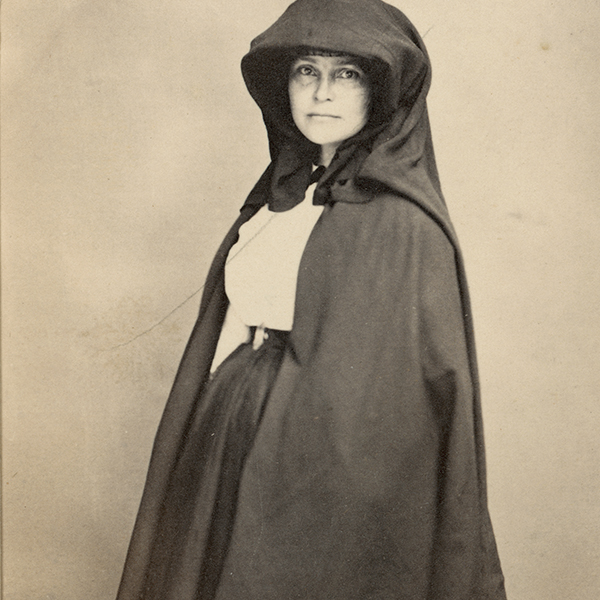
The Civil War had a profound effect on nearly all aspects of life for Wisconsin citizens, regardless of whether they became a part of the Union military forces. Wisconsin’s women played a vital role in the success of the war effort, providing medical, spiritual, and economic support to the soldiers. Middle- and upper-class women, especially those in villages and cities, set aside their many religious, ethnic, and political differences to form aid societies throughout the state. The Woman’s Soldiers Aid Society sent medical inspectors to improve sanitary conditions among the soldiers, donated thousands of dollars worth of supplies to the frontlines and to hospitals, and hired nurses for army hospitals.

While some women busied themselves with aid to distant regiments, others worked closer to home. Filling traditionally male roles, women helped to keep Wisconsin’s economy (and their families) afloat by working tirelessly in the fields and in a number of commercial industries.

1843: Caroline Quarlls escapes to Canada
http://www.wisconsinhistory.org/turningpoints/search.asp?id=194

1850s: Records of some underground railroad escapes, including Mrs. Davies (pgs 39-42)
http://www.wisconsinhistory.org/turningpoints/search.asp?id=44

1863: Women try to raise money to aid wounded soldiers
http://www.wisconsinhistory.org/turningpoints/search.asp?id=95

1860s: Cordelia Harvey’s relief efforts for Wisconsin soldiers and their families
http://www.wisconsinhistory.org/turningpoints/search.asp?id=659

1860s: View a collection of documents on women and the Civil War home front
http://www.wisconsinhistory.org/turningpoints/search.asp?id=392

4. Industrialization and Change

In Wisconsin, as elsewhere in the nation, the decades following the Civil War were a time of rapid industrialization, urbanization, and social change. Dairy farming spread quickly throughout southern Wisconsin; a woman, Anne Nickerson Pickett, had founded the first dairy cooperative near Lake Mills as early as 1841. Colleges and universities began providing women with opportunities for higher education, while new employment opportunities drew women out of the home and into the labor market. New technologies also helped to transform daily life, though few working class or immigrant women could take advantage of either technological or economic changes due to financial, and often social, limitations.

The industrialization of agriculture coupled with the growth of manufacturing contributed to the rise of Wisconsin labor organizations. While many of these labor unions were hostile to women, viewing them as a “competitive menace,” others proved more welcoming, particularly the Wisconsin State Federation of Labor which made universal suffrage a part of its reform platform. Women workers did not sit idly by during strikes either, joining or even instigating many demonstrations.

The relationship between labor and socialism in Wisconsin was a close one, which contributed to the general support among both groups for women’s rights and suffrage. Meta Schlichting Berger, wife of Milwaukee’s leading Socialist, Victor Berger, was a leader both among women in the Socialist Party and women in suffragist politics.

Wisconsin’s rapid economic growth in the early twentieth century served as a magnet for immigrants, many of whom faced Americanization efforts in schools and community organizations like settlement homes. Working with recent immigrants, settlement house workers, predominately women, tried to ease the adjustment to a new country by consciously teaching white middle-class values in urban ethnic neighborhoods. At “The Settlement” in Milwaukee, for example, Jewish women and girls were introduced to American consumer culture through cooking classes. These efforts were relatively benign, though, in comparison to the harsh, government-sanctioned assimilation tactics Indian education programs forced on Native American children.

1860s: A former student recalls Milwaukee Female College
http://www.wisconsinhistory.org/turningpoints/search.asp?id=399

1895: Ojibwe girls learn to use sewing machines, 1895
http://www.wisconsinhistory.org/turningpoints/search.asp?id=816

1898: Woodworkers strike turns violent in Oshkosh
http://www.wisconsinhistory.org/turningpoints/search.asp?id=1059

1910: Excerpts from “The Settlement” house cookbook
http://www.wisconsinhistory.org/turningpoints/search.asp?id=910

1911: What the government thought Indian girls needed to know
http://www.wisconsinhistory.org/turningpoints/search.asp?id=749

1913: The education of the girl
http://www.wisconsinhistory.org/turningpoints/search.asp?id=1039

1920: State regulations for women workers
http://www.wisconsinhistory.org/turningpoints/search.asp?id=1037

1944: A sketch of the life of Meta Berger
http://www.wisconsinhistory.org/turningpoints/search.asp?id=1061

5. Suffrage and World Wars

World War I was a time of unusual tension in Wisconsin, as the nations in Europe with which the state’s residents identified, particularly Germany and England, squared off in a bloody conflict. Wisconsin’s sizable German American population and members of the Progressive and Socialist parties generally opposed American entry into the war. Despite many sources of outspoken opposition, though, the majority of Wisconsin supported the American war effort. Many Wisconsin women became nurses while others organized drives to collect funds and supplies for soldiers, and encouraged rationing efforts on the home front. One group that sought to demonstrate their loyalty and to use the wartime emergency to advocate for their cause was the suffrage movement.

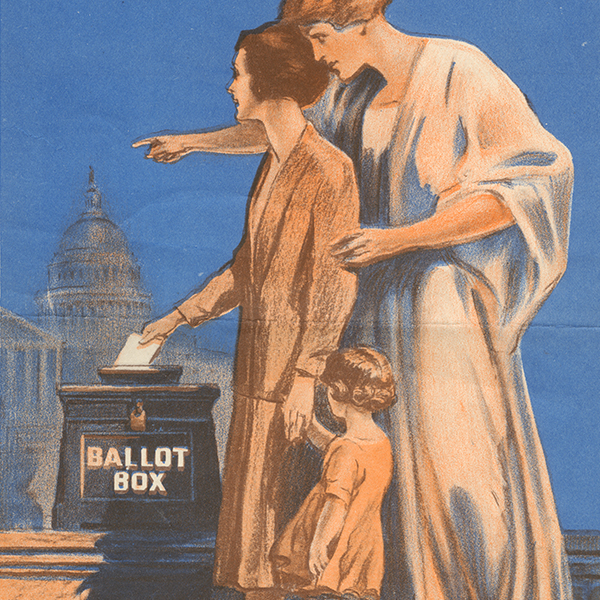
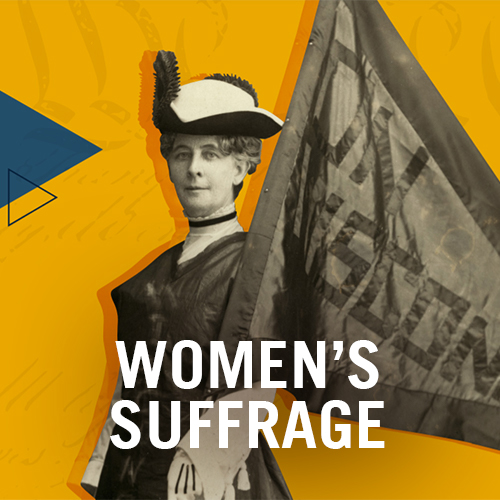
The campaign for woman suffrage in Wisconsin generally paralleled that of the national campaign. Prior to the Civil War, suffrage advocates were part of a much broader movement aimed at achieving social reform, temperance, and prohibition. After the war, suffrage activities were sporadic but the movement gradually gained support, especially among progressive-minded politicians. After gaining the right to vote in school elections, Wisconsin suffragists forged a remarkably well-organized and widespread effort that brought many Wisconsin women to national prominence, including Theodora Winton Youmans, Olympia Brown, and Carrie Chapman Catt. While the movement suffered some discouraging setbacks, most notably the failed 1912 Suffrage Referendum, Wisconsin’s suffrage activists contributed to the movement’s ultimate success when Wisconsin became the first state to ratify the Nineteenth Amendment in 1920. In 1921, Wisconsin passed the nation’s first equal rights bill, granting women full equality with men under law.

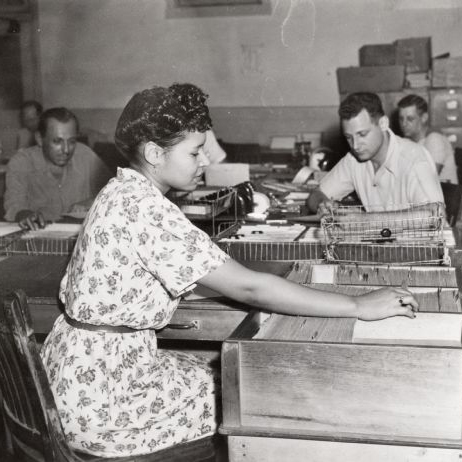
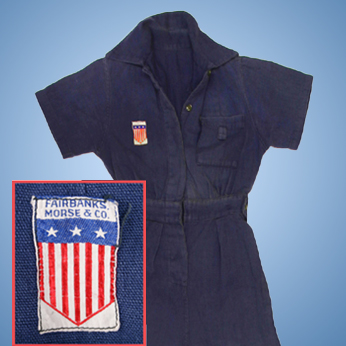
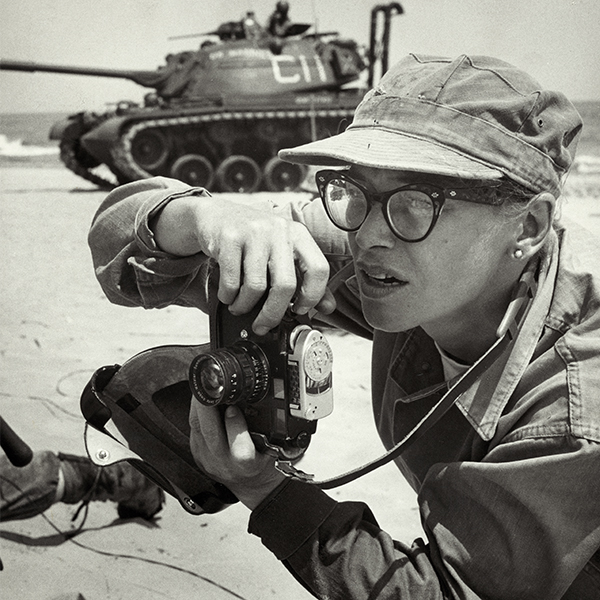
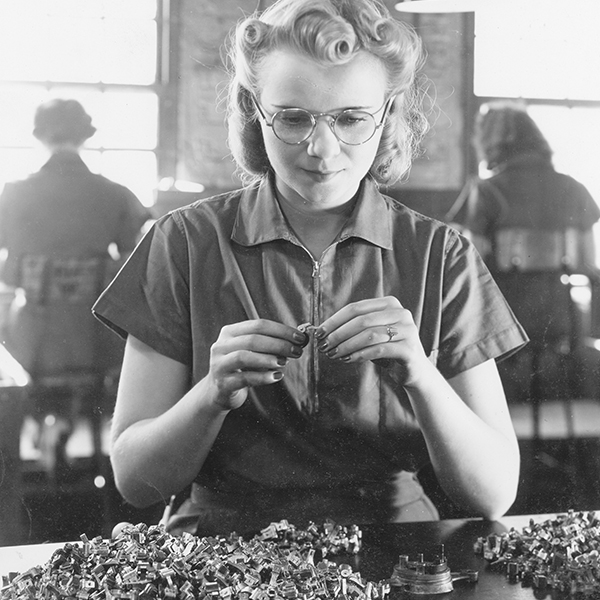
Wisconsin women responded to the nation’s needs once again during World War II, joining the military, working in factories, going without daily comforts, and supporting their families. To produce all of the goods needed in the war effort, many women went to work in factories like Allis-Chalmers or in shipyards such as those in Manitowoc. Approximately 9,000 Wisconsin women also served in the military, most in health care, but some as parachute riggers, cryptographers, and ferry pilots. WWII also launched the career of photojournalist Dickey Chapelle, one of the first female foreign correspondents. Until the war ended in August of 1945, wartime shortages of food, gasoline, and other essential goods presented daily challenges that women learned to meet by creatively stretching their household budgets.

1911: Acquaintances, old and new, among reformers by Olympia Brown
http://www.wisconsinhistory.org/turningpoints/search.asp?id=200

1912: The Political Equality League makes the case for woman suffrage
http://www.wisconsinhistory.org/turningpoints/search.asp?id=1017

Pictures of the woman suffrage movement in Wisconsin
http://www.wisconsinhistory.org/turningpoints/search.asp?id=813

Suffrage publications from the Wisconsin Woman Suffrage Association
http://www.wisconsinhistory.org/turningpoints/search.asp?id=1050

1918: The wartime letters of nurses Helen Bulovsky and Margaret Rowland
http://www.wisconsinhistory.org/turningpoints/search.asp?id=981

1918: Women’s contributions to the war effort on the home front
http://www.wisconsinhistory.org/turningpoints/search.asp?id=764

1918: Wisconsin women who lost their lives during WWI (pg 189)
http://www.wisconsinhistory.org/turningpoints/search.asp?id=1058

1921: Wisconsin passes the nation’s first equal rights bill
http://www.wisconsinhistory.org/turningpoints/search.asp?id=770

1943: Wisconsin develops solutions to wartime shortages
http://www.wisconsinhistory.org/turningpoints/search.asp?id=781

1940s: WWII photographs taken by Dickey Chapelle
http://www.wisconsinhistory.org/turningpoints/search.asp?id=828

1940s: Read wartime letters from WAC Luida Sanders
http://www.wisconsinhistory.org/turningpoints/search.asp?id=982

1946: Women metal fabricators in Fort Atkinson
http://www.wisconsinhistory.org/turningpoints/search.asp?id=1062

Throughout the centuries of Indian settlement and the subsequent waves of immigration, Wisconsin women have made significant strides forward, though many challenges remain. The last half of the twentieth century saw substantial progress in many areas but Wisconsin women still trail those of other states, particularly in the workplace, education, employment prospects, and political access. The 2004 Status of Women in Wisconsin Report found, for example, that Wisconsin ranks 45th out of all states in wage equity between women and men (women earn, on average, 29 cents less per dollar than men)—and even greater disparity exists for women of color. Wisconsin women also rank in the bottom third in business ownership. As our Turning Points in Wisconsin History collection progresses this year, we will bring their story up to date here.

  • Questions about this page? Email us
  • Email this page to a friend
select text size Use the smaller-sized textUse the larger-sized textUse the very large text